
Edgar Wallace
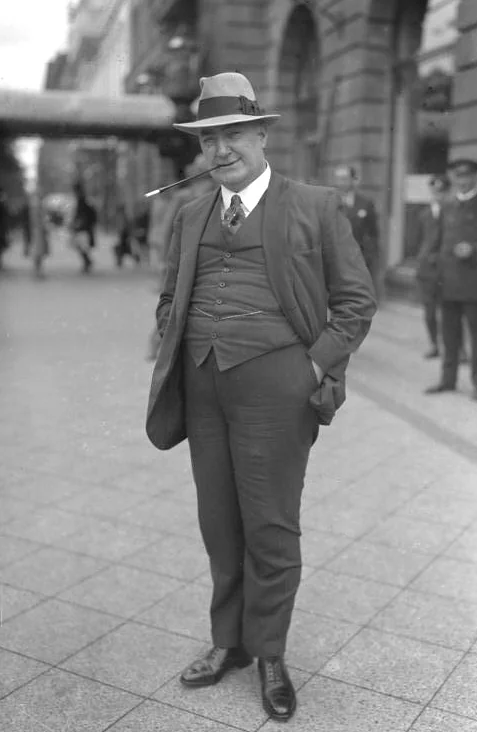
Image from Wikipedia
Image from Wikipedia
Edgar Wallace – The Architect of the Modern Thriller
A Literary Exception Between Fleet Street, Stage, and Hollywood
Richard Horatio Edgar Wallace was not an author of slow build-ups, but a high-performance writer with breathtaking productivity. Born on April 1, 1875, in Greenwich near London and dying in Hollywood in 1932, he shaped a career with 175 books, 15 plays, and numerous articles that has profoundly changed the English-language detective novel. Wallace is regarded as one of the most successful thriller authors of the early 20th century and as a pioneer of a suspense model that focuses on pace, cliffhangers, and clear character constellations. ([edgarwallace.org](https://edgarwallace.org/?utm_source=openai))
Early Years: Newspaper Culture as a School of Storytelling
Wallace's professional path began early on the streets and in the offices of London. As a young man, he worked in the Fleet Street area, gathering the journalistic strength that would later define his prose: short scenes, precise observation, direct access to conflicts. This background in daily journalism not only shaped his style but also his sense of public attention and serial publication. The mix of reportage and fiction became one of his most important aesthetic foundations. ([edgarwallace.org](https://edgarwallace.org/?utm_source=openai))
His career gained additional momentum during his military service in South Africa. There, Wallace began to seriously devote himself to writing and early on developed the profile of an author who not only tells stories but organizes material into striking arcs of suspense. This phase produced a body of work that thrives less on psychological shading and more on action, rhythm, and escalation. It was precisely this dynamism that made him a mass author with enormous reach. ([de.wikipedia.org](https://de.wikipedia.org/wiki/Edgar_Wallace?utm_source=openai))
The Breakthrough: Thrillers, Serial Characters, and Bestsellers
Wallace achieved his literary breakthrough with a form of detective novel that anticipated the modern thriller. His books relied on immediate intensification, dramatic revelations, and a high narrative tempo that engaged readers in series and sequels. Particularly the popular Just-Men and J.G. Reeder stories demonstrated how skillfully Wallace combined recognizability with variable suspense. His work thus became a kind of literary production machine, where reliability and surprise coexisted. ([encyclopedia.com](https://www.encyclopedia.com/arts/educational-magazines/wallace-richard-horatio-edgar-1875-1932?utm_source=openai))
His reputation as the inventor of the modern thriller is also based on the enormous quantity of his output. More than 200 works, including over 170 novels, were created during a career that unfolded mainly in the first three decades of the 20th century. Wallace's ability to publish quickly and consistently gave his name a strong brand power: The name itself became a promise of suspense. In the history of literature and popular culture, he therefore occupies a pivotal position between Victorian sensational literature and the mass-media detective novel. ([encyclopedia.com](https://www.encyclopedia.com/arts/educational-magazines/wallace-richard-horatio-edgar-1875-1932?utm_source=openai))
Hollywood Moment: Edgar Wallace and King Kong
Late in his career, Wallace's path led him to Hollywood, where he took a job as a screenwriter at RKO Studios in 1932. He became particularly known for his association with the early phase of King Kong: RKO commissioned him for the script, and his initial draft significantly contributed to the production history of the film, even though the final script was revised by other authors. This Hollywood chapter showcases Wallace as an author whose name resonated far beyond the literary market, also seen as a quality and appeal factor in the film industry. ([film-foundation.org](https://www.film-foundation.org/king-kong-hfpa?utm_source=openai))
The myth surrounding King Kong also underscores Wallace's position within the media network of the interwar period. He wrote not only books but moved confidently between novels, theater, and cinema. The fact that he died in 1932 while working on the project adds further tragedy to this episode and makes it one of the most well-known unfinished chapters in film history. His work in Hollywood remains less a peripheral aspect and more a symbol of the media versatility of his oeuvre. ([edgarwallace.org](https://edgarwallace.org/?utm_source=openai))
Memory Discography: Work, Adaptations, and Cultural Reach
For a writer like Edgar Wallace, the actual "discography" lies in the history of works and adaptations: books, plays, film adaptations, audio versions, and ongoing reissues. The official Wallace catalog indicates that his books have remained in print continuously in England and Germany. This enduring presence illustrates how deeply his name is embedded in popular culture. The editions represent a literary long-term career that continues to exist beyond the author's death. ([edgarwallace.org](https://edgarwallace.org/?utm_source=openai))
The reception also speaks to this stability. Reference works and literary databases describe Wallace as a central figure in suspense literature and emphasize his influence on the genre. Especially his sense of tight constructions, rapid dialogues, and clearly defined conflicts made him equally productive for later crime authors and cinema. His narrative technique thrives on efficiency, and that is precisely where his recognizability lies to this day. ([ebsco.com](https://www.ebsco.com/research-starters/history/edgar-wallace?utm_source=openai))
Style and Signature: Tempo, Suspense, and Mass Appeal Drama
Wallace's style is designed for immediate impact. He works with short chapters, sharp twists, and a dramaturgy that consistently links the resolution of a mystery with a new problem. This technique makes his texts still easily readable and highly effective today because it creates suspense not through ornamental language but through precisely placed information. This consistency underlies his status as a leading representative of the early thriller. ([encyclopedia.com](https://www.encyclopedia.com/arts/educational-magazines/wallace-richard-horatio-edgar-1875-1932?utm_source=openai))
Moreover, there is a clear popular aesthetic: Wallace wrote for a broad audience without lowering the expectations for narrative tension. His characters are often archetypal, allowing the story to unfold all the more quickly. This lends his books an almost serial energy, which can now be seen as a precursor to modern genre logic. Between literature, sensationalism, and mass media, Wallace occupied precisely that space in which genre culture sustainably arises. ([de.wikipedia.org](https://de.wikipedia.org/wiki/Edgar_Wallace?utm_source=openai))
Cultural Influence: From Crime to Film Icon
Edgar Wallace was not only read but culturally reprocessed as well. His stories and his name keep appearing in theater, film, and later editions because they convey a promise of immediate suspense. Particularly in the German-speaking world, the name Wallace remained synonymous with criminal entertainment that had a high degree of recognizability. The official Wallace cosmos and ongoing publications keep this cultural presence alive to this day. ([edgarwallace.org](https://edgarwallace.org/?utm_source=openai))
The ongoing engagement with him in societies, archives, and collections shows that Wallace has long surpassed the status of a mere bestseller author. He is a case of popular literature that does not vanish but continues to live on in ever-new media forms. His career connects journalism, novels, theater, and film into an early model of cross-media authorship. This is exactly where his historical significance lies. ([edgarwallace.org](https://edgarwallace.org/Information%20about%20Edgar%20Wallace%20Society.htm?utm_source=openai))
Current Projects and Publications
Since Edgar Wallace passed away in 1932, there are no current independent projects, tours, or new releases in the sense of a living artist's career. However, the ongoing history of editions and receptions remains relevant: The official Wallace catalog continues to list available titles, and research as well as the circulation among collectors and readers keeps his work present. For an author’s legacy, this means: no new works, but a permanently active afterlife. ([edgarwallace.org](https://edgarwallace.org/?utm_source=openai))
Conclusion: Why Edgar Wallace Remains Fascinating Today
Edgar Wallace captivates because he did not just write suspense but conceived it as a system. His career shows how journalistic precision, enormous productivity, and a keen sense of audience expectations can lead to a body of work that remains effective over time. Anyone who wants to understand how the modern thriller, serial crime, and popular storytelling are interconnected cannot overlook Wallace. His work thrives on pace, recognizability, and narrative energy – a strong reason to rediscover him over and over again. ([encyclopedia.com](https://www.encyclopedia.com/arts/educational-magazines/wallace-richard-horatio-edgar-1875-1932?utm_source=openai))
Particularly the connection between literature, theater, and film makes him one of the defining figures of crime culture in the 20th century. Edgar Wallace remains fascinating because he has shaped an entire narrative tradition that continues to reach into today’s genre productions. Those who read his books or follow his adaptations experience the birth of a modern sense of suspense. This heritage deserves to be experienced live again and again in readings and film adaptations. ([film-foundation.org](https://www.film-foundation.org/king-kong-hfpa?utm_source=openai))
Official Channels of Edgar Wallace:
- Instagram: no official profile found
- Facebook: no official profile found
- YouTube: no official profile found
- Spotify: no official profile found
- TikTok: no official profile found
Sources:
- Edgar Wallace Site – Official Website
- Edgar Wallace Society – Official Information Page
- Wikipedia – Edgar Wallace
- EBSCO Research Starters – Edgar Wallace Biography
- Encyclopedia.com – Wallace, Richard Horatio Edgar 1875-1932
- The Film Foundation – Out of the Vaults: “King Kong”, 1933
- Wikipedia – King Kong (1933 film)