
Alexander von Zemlinsky
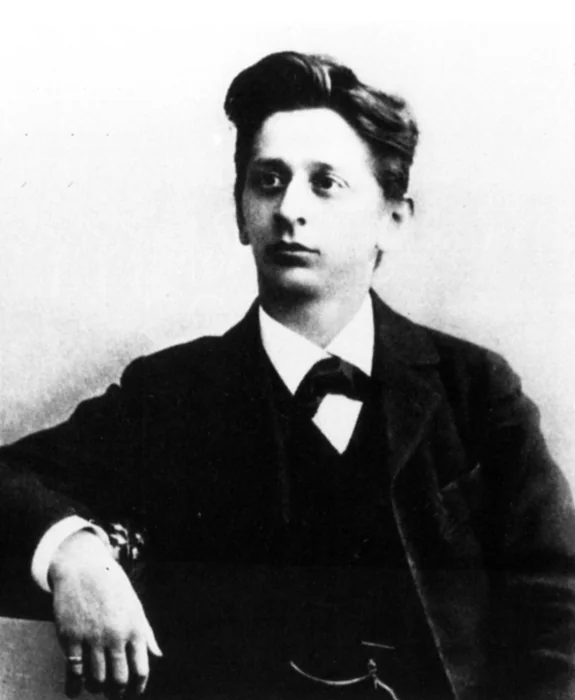
Image from Wikipedia
Image from Wikipedia
Alexander von Zemlinsky: The Elegant Boundary Crosser Between Late Romanticism, Modernity, and Music Theatre
An Austrian composer and conductor whose music unites the Viennese turn of the century, Prague's musical life, and emigration in a distinctive sonic memory.
Alexander von Zemlinsky is one of those artists whose musical career long stood in the shadow of the great names, and whose work is all the more fascinating today. Born on October 14, 1871, in Vienna, the composer and conductor grew up in a culturally diverse family and developed an extraordinary pianistic and compositional talent from an early age. His father, Adolf von Zemlinszky, was a writer and journalist; the Viennese background, the Jewish-Catholic family ties, and the atmosphere of the Danube metropolis significantly shaped Zemlinsky's artistic development. (de.wikipedia.org)
It became clear early on that Zemlinsky was not merely an epigone of Late Romanticism but an independent creator of musical forms. He moved in an environment where Brahms, Mahler, Schoenberg, and the Viennese Modernism defined the horizon, developing a sound language that oscillated between warmth, psychological depth, and formal refinement. As a conductor, teacher, and networker of the music scene, he was as present as a composer, yet the major breakthrough eluded him during his lifetime. It is precisely this tension between recognition and misrecognition that makes his biography so intriguing. (zemlinsky.at)
Early Years in Vienna: Talent, Proximity to Brahms, and First Compositional Steps
Zemlinsky's education took place in a musically concentrated Vienna. Already at a young age, he emerged as a talented pianist, played in synagogues and during rehearsals, and gained practical experience in the city's musical life. His proximity to the Brahms circle was particularly significant: Johannes Brahms recognized his talent and supported him during a time when Zemlinsky was still emerging as a composer and musician. This early encouragement gave weight to his career that remained evident in his symphonic and chamber music works later on. (zemlinsky.at)
The first works already exhibit that blend of craftsmanship and expressive emphasis that distinguishes Zemlinsky from many contemporaries. His early compositions stand in the tradition of Brahms, Schumann, and Chopin but also show a tendency toward dense chromaticism and that emotionally charged melody that later became his hallmark. In the Viennese artist associations of the 1890s, he connected with a scene that accelerated his musical development while also providing intellectual stimulation. (zemlinsky.at)
The Path to Composer and Conductor: Vienna, Operetta, and the Struggle for Recognition
Between 1900 and 1904, Zemlinsky served as a conductor at the Carl Theater and the Theater an der Wien, but almost exclusively in the realm of operetta. This chapter reveals a often underestimated side of his musical career: he was not an aloof studio composer but an artist with stage experience, repertoire knowledge, and direct contact with the audience. At the same time, he found himself in a tension between commercial everyday life and the desire to be recognized as a serious music dramatist. (zemlinsky.at)
A crucial turning point in his career was his collaboration with Arnold Schönberg. In 1904, Zemlinsky co-founded the "Vereinigung schaffender Tonkünstler" with him, dedicated to the promotion of new music. In the Viennese art scene, he established connections with Mahler, Schreker, Hofmannsthal, Gerstl, Korngold, and other influential figures of the time. This integration into a network of composers, writers, painters, and critics made him a true catalyst of modernity, even though he never became a radical reformer in the style of the Second Viennese School. (zemlinsky.at)
The Breakthrough That Wasn't: Music Theatre as an Artistic Center
The official biography of the Zemlinsky fund emphasizes that he never achieved a major breakthrough, even though he increasingly focused on music theatre until 1910. This focus is central to his artistic profile: Zemlinsky thought in dramatic arcs, psychological contrasts, and colorful orchestral textures. His operas show a strong affinity for literary material, the inner worlds of characters, and a highly concentrated musical rhetoric. (zemlinsky.at)
Especially notable is the connection between late Romantic opulence and modern expression. Works like Eine florentinische Tragödie, Der Zwerg, the Sinfonietta, and the Lyrische Symphonie represent some of the most frequently mentioned focal points in his discography and reception. The operas and orchestral works demonstrate how flexibly Zemlinsky navigated between intimacy, ironic distance, and grand emotionality. It is here that his enduring appeal for conductors, opera houses, and labels lies. (universalis.fr)
Prague, Emigration, and Late Works: A Career Between Departure and Loss
Another crucial chapter of his career began in Prague, where Zemlinsky worked from 1911 and later played an important role again from 1920 to 1927. The Prague years represent a phase of maturity in which his musical language became even more concentrated, colorful, and simultaneously bolder. Here, his experience as an opera composer, conductor, and theater practitioner condensed into a style that mediated between Austrian tradition and European modernity. (zemlinsky.at)
However, the political upheavals destroyed many opportunities. The rise of the Nazis forced Zemlinsky to return to Vienna in 1933 and prevented the success that was developing as an opera composer in Germany. His last work, the unfinished opera Der König Kandaules, remained a fragment of a late work troubled by increasing health issues. A nervous breakdown and several strokes ultimately ended his compositional activity; Zemlinsky died in 1942 in Larchmont, New York. (deutsche-biographie.de)
Discography, Rediscovery, and Critical Reception
Zemlinsky's discography is notably broad today, as his music has been intensely rediscovered in the 20th and 21st centuries. Labels like Warner Classics and Naxos document the diversity of his oeuvre with recordings of Lyrische Symphonie, Die Seejungfrau, Sinfonietta, Der Zwerg, and other works. These releases not only showcase the range of his music but also the ongoing demand for repertoire beyond the canon. (warnerclassics.com)
The music press often describes Zemlinsky as a composer between Brahms and Mahler, as a voice in a “fascinating stylistic crevice.” The Guardian highlights the melodic warmth, the variety of his early symphonies, and the emotional density of his later orchestral works. Especially Die Seejungfrau is praised as a late-Romantic sensual, dramatically multilayered piece, whose return to the repertoire since the 1980s can be seen as late justice. (theguardian.com)
The critical reception has also changed significantly. While Zemlinsky long regarded as a marginal figure of modernity, today's recordings appreciate his ability to combine lyrical lines, orchestral transparency, and expressionistic intensity. His four string quartets are considered a particularly precise compass for his stylistic development over several decades. These works demonstrate that Zemlinsky was not just an opera and orchestral composer but also a master of chamber music with his distinctive handwriting. (theguardian.com)
Current Projects and Releases: A Canon Without a Living Artist
Since Alexander von Zemlinsky died in 1942, there are no current projects, no new albums, and no active touring plans. However, ongoing re-releases, catalog maintenance, and new interpretations of his works by international labels are visible. The release policy of Warner Classics and Naxos indicates that Zemlinsky's music will continue to be cultivated as living repertoire in 2024 and 2025, even if the initiative comes from orchestras, conductors, and producers. (warnerclassics.com)
Style, Sound Language, and Cultural Influence
Zemlinsky's style blends late Romanticism, expanded tonality, and dramatic intensification. His compositions often sound like psychological scores: harmony, orchestration, and formal construction serve not just for beautiful sound, but for character depiction and emotional sharpening. In this regard, he is close to Viennese Modernism, yet remains more anchored in tradition than Schönberg or Berg. (zemlinsky.at)
Culturally, Zemlinsky is important today mainly as a bridging figure. He mediates between Brahms and musical modernity, between operetta and serious music drama, between the Viennese milieu and Central European emigration history. His rediscovery since the 1970s has shown how incomplete music history remains if it only follows the loudest names. Thus, Zemlinsky is not just a “rediscovered” composer but a key to understanding the musical transitional period around 1900. (zemlinsky.at)
Conclusion: Why Alexander von Zemlinsky Captivates Even Today
Alexander von Zemlinsky fascinates because his work is both elegant, passionate, and historically charged. He did not write music for quick effects, but for the inner drama, for the stage of feeling, and for a sound world that stands between farewell and departure. Those who listen to his operas, symphonies, and chamber music encounter a composer of extraordinary sensitivity and underestimated greatness. His music is worth discovering on every level: as repertoire, as cultural history, and as an immediate listening experience. (zemlinsky.at)
Anyone who experiences Zemlinsky live or in high-quality recordings hears not just a descendant of Late Romanticism but an independent architect of musical expression. Especially in a time that is rearranging the canon, his work seems remarkably modern. His music demands attention and rewards it with depth, color, and emotional intensity. (warnerclassics.com)
Official Channels of Alexander von Zemlinsky:
- Instagram: no official profile found
- Facebook: no official profile found
- YouTube: no official profile found
- Spotify: no official profile found
- TikTok: no official profile found
Sources:
- Alexander Zemlinsky Fund / Society of Friends of Music in Vienna – Official Biography
- Deutsche Biographie – Zemlinsky, Alexander von
- Warner Classics – Alexander Zemlinsky Releases
- Naxos – Recordings by Alexander von Zemlinsky
- The Guardian – Zemlinsky: Symphonies in D minor and B flat major – review
- The Guardian – Zemlinsky: Die Seejungfrau review
- The Guardian – Zemlinsky: Die Seejungfrau; Sinfonietta CD review
- The Guardian – BBC NOW/Brabbins review
- Wikipedia – Alexander von Zemlinsky