
Alexander von Zemlinsky
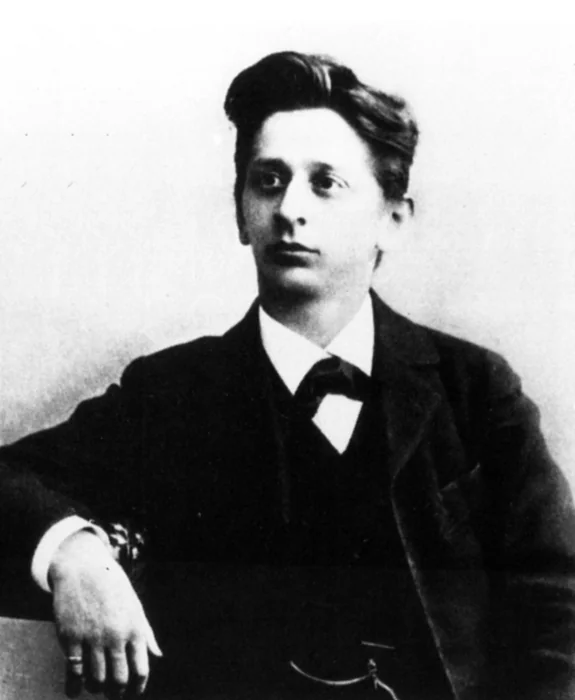
Image from Wikipedia
Image from Wikipedia
Alexander von Zemlinsky – The Sound Architect between Late-Romanticism, Modernity and Exile
A composer and conductor from Vienna who transformed the musical upheavals of his era into a distinctive language
Alexander von Zemlinsky is one of those great names in music history whose impact remained greater for a long time than their fame. Born in 1871 in Vienna, the composer and conductor developed a personal sound language from the sonic world of Late-Romanticism, often finely calibrated, that mediates between tradition, expressiveness, and modernity. His biography navigates through the pulsating Vienna of the turn of the century, the musical life in Prague, the opera world in Berlin, and finally into American exile. ([zemlinsky.at](https://www.zemlinsky.at/de/biographie))
Vienna: Background, Education, and Early Influences
Zemlinsky grew up in the Leopoldstadt district of Vienna, an area with a strong Jewish influence, and exhibited musical talent at an early age. At just under 13 years old, he was admitted to the Conservatory of the Society of Music Friends, where he studied until 1892 and composed his first works. His early compositions were still clearly under the influence of Johannes Brahms, who was seen as a role model and supporter. ([zemlinsky.at](https://www.zemlinsky.at/de/biographie?utm_source=openai))
The years in Vienna shaped Zemlinsky not only as a composer but also as a networker in the music scene. He moved within a milieu where encounters with Arnold Schönberg and Alma Schindler became significant both biographically and artistically. During this phase, he developed close ties to the musical avant-garde that later generations would identify as the Second Viennese School and as a route into modernity. ([zemlinsky.at](https://www.zemlinsky.at/en?utm_source=openai))
The Conductor as Authority: Stage, Repertoire, and Sound Culture
After 1900, Zemlinsky solidified his position as a musical leader in Vienna, initially at the Carl Theater and the Theater an der Wien, later at the Volksoper and for one season at the Hofoper. There, he primarily conducted operettas but was also able to take on the larger repertoire starting in 1904. This experience sharpened his perception of dramatic architecture, singer direction, and the colorful organization of the orchestra. ([zemlinsky.at](https://www.zemlinsky.at/de/biographie))
Particularly influential were the Prague years from 1911 to 1927 when Zemlinsky served as the musical director of the German Landestheater. Here, he celebrated his greatest successes at the podium, especially with Mozart, Wagner, Mahler, and Schönberg. Contemporaries described his conducting as witty, natural, and serving the music; sources emphasize his authority, stage presence, and the ability to imbue works with dramatic tension without resorting to gimmickry. ([zemlinsky.at](https://www.zemlinsky.at/de/biographie))
The Opera as Center: From Comedy to Psychological Tragedy
Zemlinsky's compositional heart beat particularly strongly for music theater. By 1910, he had written four operas that demonstrated his sure hand for dramatic configurations; additional stage works followed, in which he connected different themes and forms of expression. The official Zemlinsky fund material highlights that he created a sophisticated and repertoire-worthy comedy with Kleider machen Leute, while the Oscar Wilde operas Eine florentinische Tragödie and Der Zwerg definitively established his reputation as a skilled opera composer. ([zemlinsky.at](https://www.zemlinsky.at/de/biographie))
It is precisely these one-act operas that showcase Zemlinsky's unique talent for psychological intensification. His music combines dramatic precision with sonic refinement, and the interrelation of voice, orchestra, and staged intensification results in a distinctive tension. The operas do not merely follow the late-Romantic model but open themselves to a more modern, linguistically flexible, and harmonically fluid dramaturgy. ([zemlinsky.at](https://www.zemlinsky.at/de/schaffen/der-opernkomponist-II?utm_source=openai))
Prague and Berlin: Success, Repertoire, and the Struggle for Recognition
In Prague, Zemlinsky achieved his strongest public resonance as a conductor. There, his name was closely associated with interpretations of Mozart and Wagner, but also with the promotion of Mahler’s and Schönberg's music. Sources emphasize that he was able to compose very little during this time; nevertheless, works of lasting value emerged in this environment, including the Second String Quartet, the Lyrische Symphonie, and the two Wilde operas. ([zemlinsky.at](https://www.zemlinsky.at/de/biographie))
In 1927, Zemlinsky moved to the Kroll Opera in Berlin, where he directed productions that drew attention for their stage aesthetics. At the same time, he found himself eclipsed by younger conductors such as Otto Klemperer, Georg Szell, and Erich Kleiber, gradually moving out of the center of public consciousness. This phase exemplifies an artist who had significant influence on practice but whose name never achieved the stature of a Europe-wide dominant brand. ([zemlinsky.at](https://www.zemlinsky.at/de/biographie))
Musical Language: Between Brahms, Mahler, Schönberg, and His Own Handwriting
Zemlinsky's style is a prime example of productive assimilation. Official texts describe him as a composer with "seismographic" reactivity, who did not copy influences but transferred them into his own idiom. Early works display Brahmsian formal rigor and dramatic density, while later works employ sharper harmonies, irregular rhythms, and a noticeable intensification of expression. ([zemlinsky.at](https://www.zemlinsky.at/de/beziehungen/am-rand-der-wiener-schule?utm_source=openai))
The Lyrische Symphonie is considered the highlight of this body of work: a large-scale piece with texts by Tagore, where voice and orchestra blend into shimmering, highly sensitive soundscapes. The booklet of a Naxos release describes the orchestration as luxurious yet controlled, far from mere opulence. Later works such as Symphonische Gesänge then demonstrate a leaner, more austere sound language, working with African-American poetry from the Harlem Renaissance without resorting to jazz or blues quotations. ([cdn.naxosmusiclibrary.com](https://cdn.naxosmusiclibrary.com/sharedfiles/booklets/DEC/booklet-00028947883579.pdf))
Discography, Catalog of Works, and Rediscovery
As a composer, Zemlinsky left behind no pop or chart repertoire, but a concentrated oeuvre of operas, orchestral music, chamber music, songs, and choral works. The official material points to the centrality of the Lyrische Symphonie, Symphonische Gesänge, the Second String Quartet, and the two Oscar Wilde one-acters. Added to these are the piano trio, the Sinfonietta, various string quartets, and the later opera projects, including Der König Kandaules as a significant late work. ([zemlinsky.at](https://www.zemlinsky.at/de/biographie))
In terms of reception, rediscovery since the 1970s has played a central role. The official biography speaks of a renaissance through performances and recordings of the major works; this phase is considered complete at the latest with the Hamburg premiere of Der König Kandaules in 1996. Critics and the music press often describe Zemlinsky today as an underrated master of the transitional period, whose works encapsulate the movements between Late-Romanticism, Expressionism, New Objectivity, and classical formal discipline. ([zemlinsky.at](https://www.zemlinsky.at/de/biographie))
Cultural Influence and Historical Significance
Zemlinsky found himself at the center of a vibrant musical milieu, where closeness to Brahms, Viennese Modernism, and international opera culture intersected. He was a teacher to Arnold Schönberg, with whom he maintained a close biographical and aesthetic relationship, and he responded to new currents with an openness that distinguished him from the dogmatic positions of his time. His work as a conductor also profoundly influenced the performance culture in Vienna, Prague, and Berlin. ([cdn.naxosmusiclibrary.com](https://cdn.naxosmusiclibrary.com/sharedfiles/booklets/DEC/booklet-00028947883579.pdf))
His exile also forms part of his historical significance. After 1933, under the pressure of Nazi persecution, he had to give up his position, returned to Vienna, and fled to New York in 1938 with his second wife, Louise. He arrived there as a broken man; after several strokes, he died in 1942 in Larchmont. This biographical turn explains why his late works remained fragmentary and why his name only gradually returned to international concert life. ([zemlinsky.at](https://www.zemlinsky.at/de/biographie))
Conclusion: Why Alexander von Zemlinsky is Fascinating Today
Alexander von Zemlinsky fascinates as a composer of fine transitions: between late-Romantic exuberance and modern density, between stage instinct and intellectual formal artistry, between public success and historical marginalization. His music possesses emotional depth, orchestral elegance, and psychological precision that keep it alive to this day. Those who listen to his operas, the Lyrische Symphonie, or the late chamber works encounter one of the most distinctive musicians of the Viennese Modernism. ([zemlinsky.at](https://www.zemlinsky.at/de/biographie))
It is precisely this mix of expression, structure, and historical tension that makes Zemlinsky an artist worth rediscovering. His works belong on the grand stages and in the great concert halls because they reveal more of their depth with each listening. Experiencing Zemlinsky live means hearing a distinct sound language brimming with passion, refinement, and existential truth. ([zemlinsky.at](https://www.zemlinsky.at/de/biographie))
Official Channels of Alexander von Zemlinsky:
- Instagram: No official profile found
- Facebook: No official profile found
- YouTube: No official profile found
- Spotify: No official profile found
- TikTok: No official profile found
Sources:
- Alexander Zemlinsky Fund – Biography
- Alexander Zemlinsky Fund – Biography
- Alexander Zemlinsky Fund – The Opera Composer / II
- Alexander Zemlinsky Fund – The Opera Composer / III
- Alexander Zemlinsky Fund – On the Fringe of the Wiener School
- Alexander Zemlinsky Fund – The Conductor
- Atlanta Symphony Orchestra – Alexander von Zemlinsky
- Naxos Music Library – Booklet of Zemlinsky Works
- neue musikzeitung – Review of Zemlinsky Recordings
- Alexander Zemlinsky Fund – Catalogue of Compositions
- Wikipedia: Alexander von Zemlinsky – Image and Text Source