
Rembrandt van Rijn
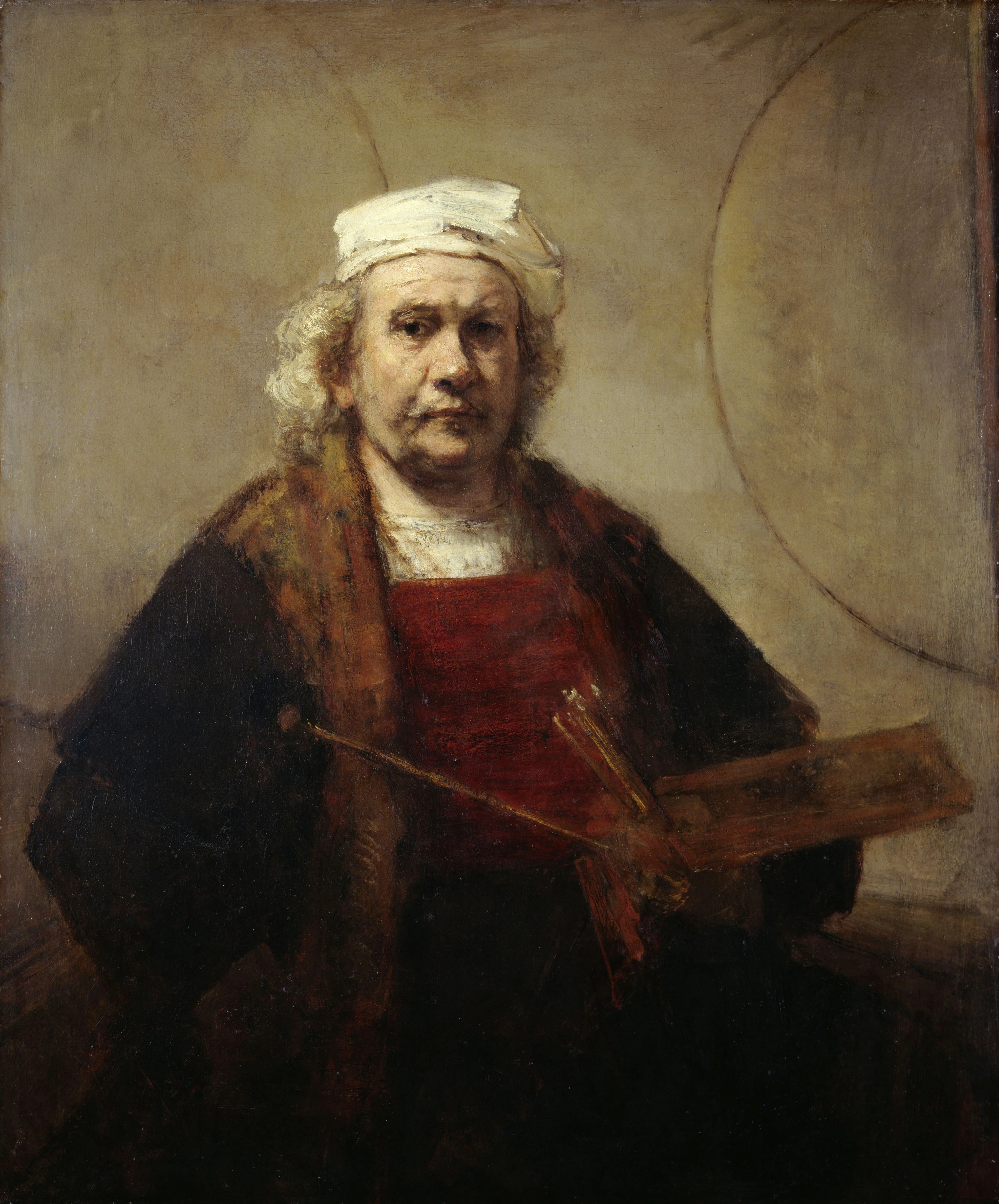
Image from Wikipedia
Image from Wikipedia
Rembrandt van Rijn – The Great Storyteller of Dutch Baroque
An artist who redefined light, drama, and humanity
Rembrandt Harmenszoon van Rijn is one of the pivotal figures in European art history. The Dutch painter, etcher, and draftsman was born on July 15, 1606, in Leiden and died on October 4, 1669, in Amsterdam; his works emerged during the Golden Age of the Netherlands, a time of political, economic, and cultural prosperity. Even during his lifetime, he was regarded as an exceptional image creator, whose portraits, historical paintings, biblical scenes, and self-portraits stand out for their psychological depth and dramatic lighting. ([britannica.com](https://www.britannica.com/biography/Rembrandt-van-Rijn?utm_source=openai))
Biographical beginnings: Leiden, education, and early independence
Rembrandt grew up in Leiden and received his artistic training from Pieter Lastman, an important history painter of his time. Around 1625, he opened his first studio in Leiden and quickly established himself as an independent master, confidently organizing figures, gestures, and complex scenes. Britannica describes how heavily Rembrandt's early works were influenced by Lastman's vibrant compositions, which he transformed into new, personal pictorial solutions. ([britannica.com](https://www.britannica.com/biography/Rembrandt-van-Rijn/The-Leiden-period-1625-31?utm_source=openai))
Even during his time in Leiden, he laid the foundations for the artistic signature that would later make him world-famous. His works show an early interest in narrative condensation, the tension between body, expression, and space, as well as the effects of shadow and light. Thus, he developed into an artist with a distinctive voice, emerging from the environment of his apprenticeship. ([britannica.com](https://www.britannica.com/biography/Rembrandt-van-Rijn/The-Leiden-period-1625-31?utm_source=openai))
The breakthrough in Amsterdam: Rise to a celebrated master
In 1631, Rembrandt moved to Amsterdam and entered into a business partnership with Hendrick Uylenburgh, an art dealer with a large studio operation. The capital offered him a much larger audience than the stagnating Leiden, and it was here that his rise to a sought-after portraitist and visual storyteller began. The Rijksmuseum describes this phase as the moment when Rembrandt fundamentally changed the art world and quickly became a prominent name in Amsterdam. ([britannica.com](https://www.britannica.com/biography/Rembrandt-van-Rijn/First-Amsterdam-period-1631-1635-36?utm_source=openai))
In Amsterdam, he produced the part of his work that is still considered the core of his international fame today. Group portraits, biblical scenes, and historical representations were combined with a novel intensity that impressed not only clients but also inspired imitators. His ability to portray people in emotionally charged moments made him a master of the narrative image. ([britannica.com](https://www.britannica.com/biography/Rembrandt-van-Rijn?utm_source=openai))
The great works: Portrait, history painting, and chiaroscuro
Among Rembrandt's most famous works are The Anatomy of Dr. Tulp from 1632, The Night Watch from 1642, The Blinding of Samson, and The Hundred Guilder Print. His oeuvre includes portraits, landscapes, as well as biblical and mythological themes, but especially the so-called "history pieces" became a laboratory for artistic reinvention for him. Britannica emphasizes that he constantly reinterpreted traditional motifs in these works and sought pictorial solutions that had not been addressed artistically before. ([britannica.com](https://www.britannica.com/biography/Rembrandt-van-Rijn?utm_source=openai))
His name is closely associated with the art of chiaroscuro, characterized by strong light-dark contrasts that direct the viewer's gaze and model figures out of darkness. Rembrandt used light not only as a means of visibility but as a dramatic element that encapsulates emotion, action, and psychological tension. Therefore, his painting still feels like staged cinema on canvas: concentrated, theatrical, immediate. ([britannica.com](https://www.britannica.com/biography/Rembrandt-van-Rijn?utm_source=openai))
Workshop, students, and artistic production
Rembrandt ran a workshop and trained numerous artists. Sources from art history mention a large number of students who worked in his environment and studied his methods; his studio became an important place for knowledge transfer in Dutch painting. The combination of his own production, teaching, and workshop organization made him a key figure in the artistic infrastructure of the 17th century. ([britannica.com](https://www.britannica.com/biography/Rembrandt-van-Rijn/The-Leiden-period-1625-31?utm_source=openai))
He was also of outstanding importance in printmaking. The Rembrandt House Museum points to one of the most important collections of Rembrandt etchings worldwide and highlights his technique as a central research and exhibition topic. His etchings and drawings show the same mastery as his paintings: precise lines, atmospheric density, and an exceptional sensitivity to light handling and materiality. ([rembrandthuis.nl](https://www.rembrandthuis.nl/en/about-us/organisation/?utm_source=openai))
Financial crises and later years
Despite his fame, Rembrandt fell into significant financial difficulties. In 1656, he declared bankruptcy, and he died in poverty in 1669 in Amsterdam, which lent a tragic, almost mythical accent to his posthumous reputation. The Rembrandt House Museum also depicts the exit from his house on Jodenbreestraat as a consequence of growing debts, making it clear that the artist must be viewed not only as a figure of triumph but also as a person marked by crises. ([rembrandthuis.nl](https://www.rembrandthuis.nl/en/plan-your-visit/visitor-information/introduction/?utm_source=openai))
This tension between success and downfall makes his biography so compelling. Rembrandt did not embody a smooth career path but rather an artistic career full of breaks, setbacks, and radical self-assertion, which makes his work appear all the more urgent. His later works possess a condensed calm, an almost intimate depth, which ranks among the most powerful expressions in European painting. ([britannica.com](https://www.britannica.com/biography/Rembrandt-van-Rijn/Legacy?utm_source=openai))
Style, technique, and artistic development
Rembrandt's artistic development was not linear but progressed in phases of continuous condensation. Britannica describes his particular sensitivity to composition, tonal values, light, shadow, reflections, and the materiality of color; these characteristics gave his images a freedom that perplexed many of his contemporaries and delighted later artists. His painting style combines observation, psychological intuition, and technical experimentation. ([britannica.com](https://www.britannica.com/biography/Rembrandt-van-Rijn/Legacy?utm_source=openai))
The Rembrandt House Museum emphasizes that Rembrandt staged his art like a director, with conscious use of means such as gesture, costume, lighting, and props. This theatrical composition sharpens the narrative character of his images and explains why his works still resonate so directly today. Rembrandt sought not just a likeness but the crucial dramatic moment. ([rembrandthuis.nl](https://www.rembrandthuis.nl/nl/over-ons/pers/press/perspreview-hoogtepunten-rembrandt-in-de-regisseursstoel?utm_source=openai))
Critical reception, posthumous reputation, and cultural influence
Even during his lifetime, Rembrandt was disseminated and received through engravings and copies of his works. After his death, the art criticism of Classicism rated his coloristic painting style somewhat negatively, but his works remained sought after by collectors and fetched high prices. In the 18th century, his ideas inspired artists in Germany and England, and his life became increasingly mystified and embellished with legends. ([britannica.com](https://www.britannica.com/biography/Rembrandt-van-Rijn?utm_source=openai))
Only the source research of the 19th century brought his historical biography to light more precisely. The Rembrandt Research Project, which operated from 1968 to 2014, significantly contributed to the verification of attributions and reduced the number of works considered authentic to about 350. This research did not diminish Rembrandt but clarified him historically: as an artist whose influence on painting, printmaking, and art theory is immeasurable. ([britannica.com](https://www.britannica.com/biography/Rembrandt-van-Rijn?utm_source=openai))
Discography? No — a visual language with eternal resonance
A discography in the musical sense does not exist for Rembrandt, but his work possesses a comparable cultural reach to the great canons of music history. Central works include The Night Watch, The Anatomy of Dr. Tulp, The Blinding of Samson, The Hundred Guilder Print, and numerous self-portraits, which act like a visual diary of his artistic development. These works mark the most important stages of his oeuvre and connect art history with existential experience. ([britannica.com](https://www.britannica.com/biography/Rembrandt-van-Rijn?utm_source=openai))
Rembrandt remains fascinating because he never smooths out the human figure, but shows it in its vulnerability, dignity, and contradictions. Those who view his paintings encounter not a decorative Baroque but a deep, modern humanity with enormous stage presence in the pictorial space. It is for this reason that Rembrandt remains one of the artists who should not only be studied but continually rediscovered. ([britannica.com](https://www.britannica.com/biography/Rembrandt-van-Rijn/Legacy?utm_source=openai))
Conclusion: Why Rembrandt overwhelms to this day
Rembrandt van Rijn combines mastery, narrative power, and technical radicality in a way that resonates even today. His works demonstrate how painting can achieve psychological depth, historical weight, and spiritual intensity. Understanding him means understanding one of the great turning points in European art. ([britannica.com](https://www.britannica.com/biography/Rembrandt-van-Rijn?utm_source=openai))
The best access to Rembrandt leads through his images, his etchings, and the places of his life. A visit to the Rembrandt House Museum or the Rijksmuseum makes his artistic world immediately tangible and shows why his name remains associated with genius, drama, and timeless expressiveness. ([rembrandthuis.nl](https://www.rembrandthuis.nl/en/about-us/organisation/?utm_source=openai))
Official channels of Rembrandt van Rijn:
- Instagram: No official profile found
- Facebook: No official profile found
- YouTube: No official profile found
- Spotify: No official profile found
- TikTok: No official profile found
Sources:
- Britannica – Rembrandt van Rijn
- Britannica – Legacy of Rembrandt
- Britannica – The Leiden period (1625–31)
- Britannica – First Amsterdam period (1631–1635/36)
- Rijksmuseum – Rembrandt
- Rijksmuseum – 10 things about the life of Rembrandt
- The Rembrandt House Museum – Organisation
- The Rembrandt House Museum – Introduction
- Rembrandt Research Project – Official website
- Wikipedia: Image and text source