
Maria Anna von Bayern (1805–1877)
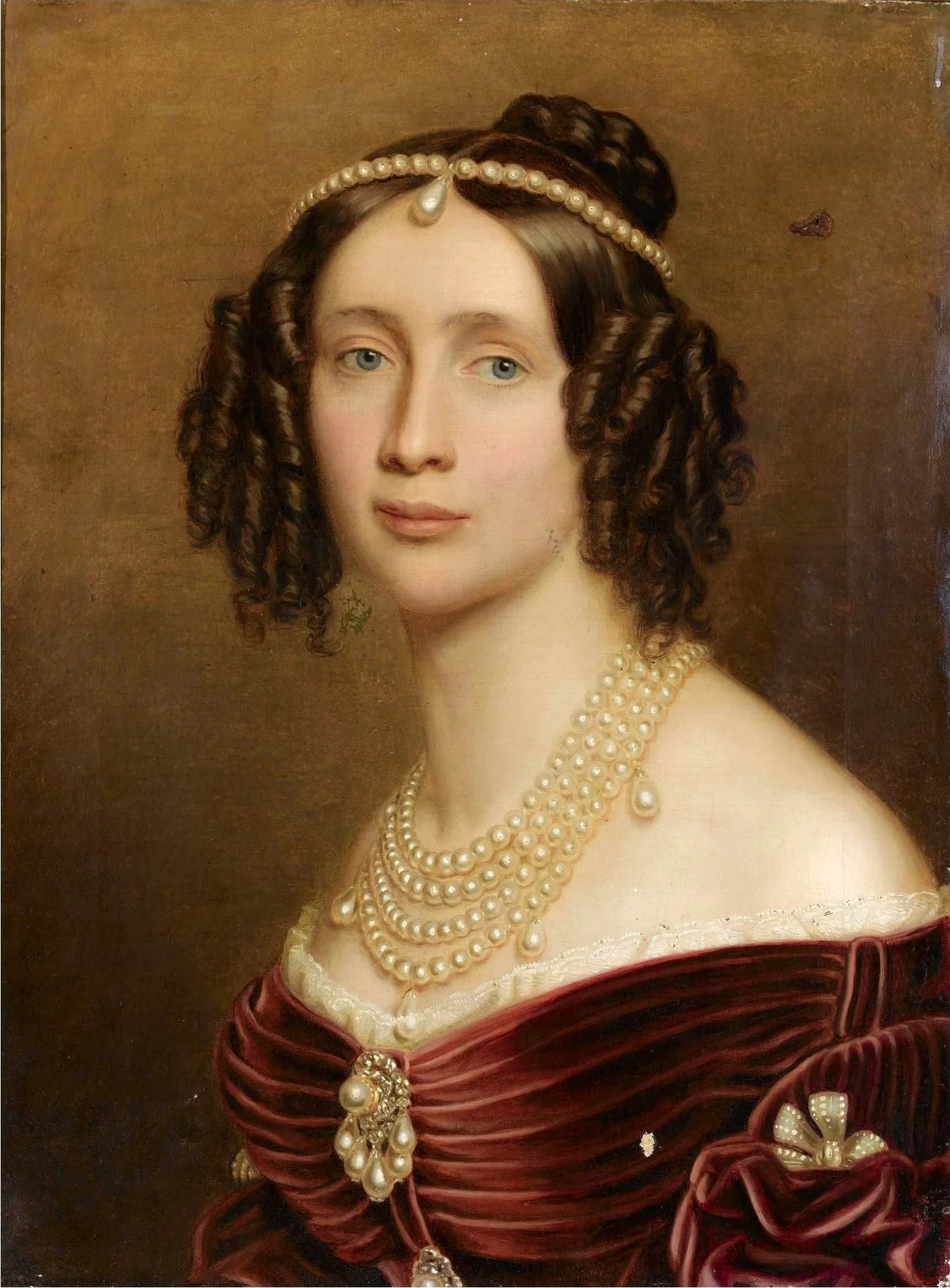
Image from Wikipedia
Image from Wikipedia
Maria Anna of Bavaria: A Bavarian Princess Between Court, History, and Royal Presence
A Queen of Saxony with Bavarian Roots and European Family History
Maria Anna Leopoldine Elisabeth Wilhelmine of Bavaria, born on January 27, 1805, in Munich and died on September 13, 1877, in Wachwitz, was one of the prominent female figures of the 19th century in the German-speaking high nobility. As a princess of Bavaria and later queen of Saxony, she was at the center of an extensive dynastic network that closely connected Bavaria, Saxony, and Austria. She is particularly known as the twin sister of Archduchess Sophie of Austria, the mother of Emperor Franz Joseph I, and as the sister of Duchess Ludovika Wilhelmine of Bavaria, the mother of Empress Elisabeth of Austria-Hungary. ([de.wikipedia.org](https://de.wikipedia.org/wiki/Maria_Anna_von_Bayern_%281805%E2%80%931877%29?utm_source=openai))
Maria Anna was not an artist in the musical sense, yet her life tells a fascinating story of representation, court culture, and political role in the monarchies of Europe. Anyone examining her biography recognizes a woman who functioned within a strictly ordered system of lineage, marriage, and court etiquette, while still remaining a visible personality. Her position as the wife of Friedrich August II of Saxony made her a defining figure of the Saxon royal house. ([de.wikipedia.org](https://de.wikipedia.org/wiki/Maria_Anna_von_Bayern_%281805%E2%80%931877%29?utm_source=openai))
Background, Education, and Early Influences
Maria Anna grew up in the House of Wittelsbach, in a family whose political and cultural significance extended far beyond Bavaria in the 19th century. From a young age, she received instruction from Friedrich Wilhelm Thiersch, who taught her and her sisters literature, geography, and history. This education reflects the educational aspirations of the House of Bavaria, where courtly representation and intellectual development were closely intertwined. ([de.wikipedia.org](https://de.wikipedia.org/wiki/Maria_Anna_von_Bayern_%281805%E2%80%931877%29?utm_source=openai))
The family background was for Maria Anna more than just lineage; it was a political resonance chamber. Her sisters and relatives were connected to the great dynasties of Europe, and Maria Anna herself became part of a network that remained influential in Bavaria, Austria, and Saxony. Her biography exemplifies how tightly woven private life and statecraft were in the monarchical 19th century. ([de.wikipedia.org](https://de.wikipedia.org/wiki/Maria_Anna_von_Bayern_%281805%E2%80%931877%29?utm_source=openai))
Marriage and Rise to Queen of Saxony
In 1819, Maria Anna married the future King Friedrich August II of Saxony. This union brought her into the forefront of Central European monarchy and made her queen of Saxony. Her official status as the queen's consort granted her a central role at the Dresden court, where representation, proximity to the ruler, and dynastic symbolism defined daily life. ([de.wikipedia.org](https://de.wikipedia.org/wiki/Maria_Anna_von_Bayern_%281805%E2%80%931877%29?utm_source=openai))
The marriage not only united two ruling houses but also blended political and cultural traditions. Maria Anna remained connected to her Bavarian roots, yet as Saxon queen, she represented a different kingdom with its own court culture. This dual anchorage made her a mediation figure between two significant German states. ([de.wikipedia.org](https://de.wikipedia.org/wiki/Maria_Anna_von_Bayern_%281805%E2%80%931877%29?utm_source=openai))
Travel, Representation, and Royal Impact
Maria Anna accompanied her husband on longer trips through Saxony, contributing to the king's popularity and portraying him as an energetic, caring ruler. These trips were not merely courtly duties; they were part of a political performance of closeness, care, and monarchical presence. Thus, Maria Anna acted as part of a public form of rule, where the appearance of the royal couple held significant importance. ([de.wikipedia.org](https://de.wikipedia.org/wiki/Maria_Anna_von_Bayern_%281805%E2%80%931877%29?utm_source=openai))
In such moments, the historical significance of Maria Anna is particularly evident: she was not a ruler in the usual sense of governance, but a queen with visibility, impact, and symbolic authority. Her role was to balance familial loyalty, court etiquette, and representational duties. This made her a quiet but certainly not an inconsequential figure of her time. ([de.wikipedia.org](https://de.wikipedia.org/wiki/Maria_Anna_von_Bayern_%281805%E2%80%931877%29?utm_source=openai))
Family Ties with European Influence
Maria Anna was part of a remarkable generation of sisters who shaped the European monarchy of the 19th century. Her sister Sophie became the mother of Franz Joseph I, another sister was Ludovika, the mother of Elisabeth, later Empress Sisi. These familial connections make Maria Anna a historical key figure within the bourgeois-aristocratic cultural memory of Central Europe. ([de.wikipedia.org](https://de.wikipedia.org/wiki/Maria_Anna_von_Bayern_%281805%E2%80%931877%29?utm_source=openai))
In hindsight, Maria Anna appears as a link between the courts of Munich, Vienna, and Dresden. Her life story belongs to that generation of princesses whose biographies write not just family history, but European history as well. The allure of her person lies precisely in this connection between personal existence and dynastic significance. ([de.wikipedia.org](https://de.wikipedia.org/wiki/Maria_Anna_von_Bayern_%281805%E2%80%931877%29?utm_source=openai))
Later Years and Death in Wachwitz
Maria Anna died on September 13, 1877, in Wachwitz. Sources confirm that she remained childless, which further concentrated her position in the dynastic system on representation and family cohesion. Her death marked the end of a life that spanned over seven decades of German and Central European history. ([archiv.sachsen.de](https://www.archiv.sachsen.de/archiv/bestand.jsp?bestandid=12559&oid=12.01&syg_id=424214&utm_source=openai))
The memory of Maria Anna today is primarily shaped historically: in biographies, archive holdings, genealogical representations, and art historical collections. Her portrait and her integration into both Saxon and Bavarian history show that she was perceived not only as the wife of a king but also as a person of her own historical weight. ([deutsche-digitale-bibliothek.de](https://www.deutsche-digitale-bibliothek.de/item/3XNQFZPFQIQQXC64EFZN7YOR375YLJD4?utm_source=openai))
Cultural Influence and Historical Context
Maria Anna did not function as a musician or composer, hence a discography in the strict sense does not exist. Nevertheless, her life represents a form of courtly culture where music, representation, and ceremony were naturally interconnected. Especially at the Saxon and Bavarian courts of the 19th century, the cultural staging of the monarchic was hardly conceivable without music, festivities, and rituals. ([de.wikipedia.org](https://de.wikipedia.org/wiki/Maria_Anna_von_Bayern_%281805%E2%80%931877%29?utm_source=openai))
For a strong SEO and historically accurate context, it remains crucial: Maria Anna of Bavaria is a figure of political and cultural history, not a popular music artist. Her significance lies in the dynastic context, in courtly presence, and in the connections between the ruling families of Europe. Anyone interested in the history of monarchy, Bavaria, Saxony, and the House of Wittelsbach will encounter an impressive personality with lasting historical significance in Maria Anna. ([de.wikipedia.org](https://de.wikipedia.org/wiki/Maria_Anna_von_Bayern_%281805%E2%80%931877%29?utm_source=openai))
Conclusion: A Princess Whose Life Mirrors European History
Maria Anna of Bavaria fascinates through her position at the intersection of great dynasties, through her role as queen of Saxony, and through the close connections to the houses of Bavaria, Austria, and Saxony. Her life represents the world of the 19th century, where lineage, marriage, and representation determined political biographies. Those seeking to understand history in its familial, cultural, and courtly contexts will find in Maria Anna a personality of lasting significance. ([de.wikipedia.org](https://de.wikipedia.org/wiki/Maria_Anna_von_Bayern_%281805%E2%80%931877%29?utm_source=openai))
There are no live experiences linked to her, but encountering her story is nonetheless worthwhile: in museums, archives, and historical collections, the image of a woman unfolds who was much more than just a marginal figure of the monarchy as queen of Saxony. Her biography speaks of power, attitude, and European interconnections – and therein lies her lasting intrigue. ([deutsche-digitale-bibliothek.de](https://www.deutsche-digitale-bibliothek.de/item/3XNQFZPFQIQQXC64EFZN7YOR375YLJD4?utm_source=openai))
Official Channels of Maria Anna of Bavaria:
- Instagram: No official profile found
- Facebook: No official profile found
- YouTube: No official profile found
- Spotify: No official profile found
- TikTok: No official profile found
Sources:
- Wikipedia – Maria Anna of Bavaria (1805–1877)
- German Biography – Marie / Maria Anna Leopoldine of Bavaria
- Saxon Biography (ISGV) – Maria Leopoldina Anna, Queen of Saxony (1805–1877)
- Practices of the Monarchy – Maria Anna, Queen of Saxony
- German Digital Library – Portrait of Maria Anna of Bavaria, Queen of Saxony