
George Gershwin
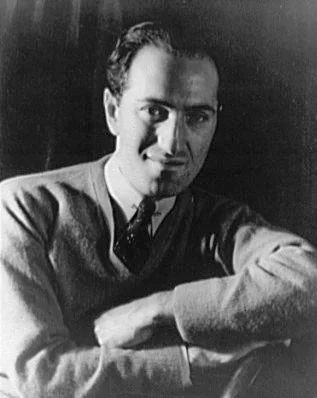
Image from Wikipedia
Image from Wikipedia
George Gershwin – The Composer Who Forever Merged Jazz and Classical Music
An American Exceptionally Talented Artist Between Broadway, Concert Halls, and Hollywood
George Gershwin is one of the defining figures of American music in the 20th century. As a composer, pianist, and conductor, he merged popular entertainment music with symphonic form, creating works that are still featured in concert programs, opera houses, and on the grand stages of the world today. His career did not follow a straight path but traversed a rare artistic tension: between Tin Pan Alley, Broadway, classical concert tradition, and the later discovered film world of Hollywood. ([gershwin.com](https://gershwin.com/george/))
Gershwin was born on September 26, 1898, in Brooklyn as Jacob Gershovitz. He showed early talent at the piano, and while he acquired classical foundations, he was also drawn to the music culture of his time: to ragtime, Broadway songs, and the rhythmic energies of urban America. This dual influence defines his stature, as few other composers of his era bridged the gap between popular songwriting and ambitious concert music so elegantly and effectively. ([eno.org](https://www.eno.org/people/george-gershwin/))
The Early Years: Songplugger, Pianist, Rising Star
Gershwin's professional start lay in the practice of the music market: he worked as a "song plugger" and later as a staff composer in Broadway publishing. These early positions shaped his sense of melody, recognizability, and musical directness. By 1918, he had published his first song, and soon after became a prominent figure in New York's music scene. His work with popular songs was not a sideline for him, but rather the foundation of a career that never saw popularity as opposed to compositional ambition. ([eno.org](https://www.eno.org/people/george-gershwin/))
His collaboration with his brother Ira Gershwin became especially important. From 1924 on, the two, known as "the Gershwins," shaped the Broadway landscape with a series of successful musicals, including Lady, Be Good!, Oh, Kay!, Funny Face, Strike Up the Band, Girl Crazy, and Of Thee I Sing. Their songs combined pointed lyrics with rhythmic precision and melodic ease; at the same time, one could already see in these works the formal sophistication that Gershwin later also showcased in the concert hall. ([gershwin.com](https://gershwin.com/george/))
The Breakthrough with “Rhapsody in Blue”
The true artistic breakthrough came in 1924 with Rhapsody in Blue. The work was commissioned by Paul Whiteman and premiered in New York. It combined jazz-influenced idioms with concert hall architecture, demonstrating that American material was not only suitable for songs and revues but also served as a viable foundation for longer forms. The famous clarinet opening became one of the most iconic moments in music history and instantly made Gershwin a prominent public figure. ([gershwin.com](https://gershwin.com/george/))
Following Rhapsody in Blue, other central works emerged, such as the Piano Concerto in F from 1925, An American in Paris, and the Second Rhapsody. These pieces mark his development from a song composer to a serious orchestral composer. Not only is melodic invention crucial, but also Gershwin’s ability for instrumentation, dramatic development, and the sound characterization of an American urban aesthetic. ([gershwin.com](https://gershwin.com/george/))
Broadway Success and the Power of the Song
In the 1920s and early 1930s, Gershwin became one of the most popular Broadway composers of his time. His shows produced songs that lived beyond the theater and became part of the broader music culture. Particularly Girl Crazy with the hit I Got Rhythm and Of Thee I Sing solidified his reputation as a composer who combined catchy melodies with harmonic sophistication and swinging rhythm. In these pieces, his mastery of musical timing is especially evident: he does not just write songs, but precise scenes in sound form. ([gershwin.com](https://gershwin.com/george/))
Culturally, Gershwin marked a turning point. He brought jazz, blues, and African American-influenced idioms into the realm of Broadway and concert stages without smoothing out their intrinsic logic. This created an aesthetic that was modern, urban, and unmistakably American. His music remained accessible but gained depth by linking popular directness with compositional discipline. ([eno.org](https://www.eno.org/people/george-gershwin/))
“Porgy and Bess”: The Ambitious Late Work
With Porgy and Bess, Gershwin reached the culmination of his artistic development. The opera, which he understood as an American "folk opera," combined blues, jazz, and musical theater into a grand dramatic arc. Particularly Summertime became one of the most performed songs of the 20th century, showcasing how Gershwin shaped a seemingly simple melodic line into a timeless emotional signature. ([gershwin.com](https://gershwin.com/george/))
The reception of the work was ambivalent, yet therein lies its historical significance. Porgy and Bess was initially a financial failure but was later recognized as a central work of American musical theater. The opera today represents Gershwin's ability to encapsulate societal reality, musical innovation, and dramatic ambition in a form that opens up an unprecedented range between opera, musical, and popular song. ([gershwin.com](https://gershwin.com/george/))
Style, Composition, and Musical Language
Gershwin's style thrives on rhythmic energy, clear melody, and a harmony that mediates between popular tonality and modern color richness. His compositions seem immediate, yet their impact derives from precise phrasing, clever articulation, and a pronounced sensitivity to timbre. Particularly in orchestral works like An American in Paris, his gift for thematic characterization and orchestral color is evident. ([gershwin.com](https://gershwin.com/george/))
At the same time, Gershwin remained a musician of the audience. His songs combine catchy hook lines with harmonic surprises, his stage works focus on theatrical succinctness, and his concert pieces convey the impression of spontaneous inspiration, although they are carefully constructed. This balance of accessibility and ambition makes him still interesting for performers of various genres today. This is also evident in the enormous number of later recordings, adaptations, and reinterpretations of his music. ([artists.spotify.com](https://artists.spotify.com/songwriter/6f8N8qe1L2qiB0f5U0sCp7))
Discography, Influence, and Critical Reception
The discography surrounding George Gershwin is less the story of a single catalog than that of a living repertoire. On streaming platforms and in classical recordings, Summertime, Rhapsody in Blue, They Can’t Take That Away From Me, I Got Rhythm, and The Man I Love are among the permanently present titles. On Spotify, Gershwin is listed as a songwriter; his pieces are streamed millions of times and featured in countless recordings. ([artists.spotify.com](https://artists.spotify.com/songwriter/6f8N8qe1L2qiB0f5U0sCp7))
The critical reception also highlights his special position: Gershwin is regarded as a "cross-border" composer who not only juxtaposed popular song and art music but also productively merged them. Musicological assessments emphasize that his success was not based solely on hit potential but on an unusually stable compositional identity. Even his early death in 1937 in Hollywood while working on The Goldwyn Follies reinforced the perception of a work that already seemed classic at the moment of its completion. ([gershwin.com](https://gershwin.com/george/))
His significance extends into today’s pop and jazz culture. The high streaming reach of his songs, the continuing presence in opera and concert programs, as well as new arrangements and repertoire compilations, demonstrate that Gershwin is not an archive composer but a living reference point. Recent entries on platforms like Spotify show how strongly his work continues to be curated, recorded, and reinterpreted. ([artists.spotify.com](https://artists.spotify.com/songwriter/6f8N8qe1L2qiB0f5U0sCp7))
Current Projects and Posthumous Releases
George Gershwin himself can no longer initiate new projects, but his work remains active. The current streaming presence showcases ongoing releases and catalog maintenance; a new release is noted on his Spotify songwriter page dated April 21, 2026, while current recordings and collections regularly bring his compositions back into conversation. For a historical oeuvre, this dynamism is crucial: it lives through interpretations, not through stagnation. ([artists.spotify.com](https://artists.spotify.com/songwriter/6f8N8qe1L2qiB0f5U0sCp7))
In this sense, Gershwin is still an active name in the music market in 2026, albeit posthumously. His works appear in new contexts, are continually recorded and updated by singers, instrumentalists, and orchestras. The category of "current projects" means for him essentially: continued relevance, growing depth of repertoire, and an unbroken cultural presence. ([artists.spotify.com](https://artists.spotify.com/songwriter/6f8N8qe1L2qiB0f5U0sCp7))
Conclusion: Why George Gershwin Continues to Fascinate Today
George Gershwin remains intriguing because he is one of the rare figures in music history who did not play popularity and artistic ambition against each other. His works sound immediate, yet they possess structure, intelligence, and historical depth. Those who listen to Gershwin encounter not only elegant melodies but the moment when American music finds its own language. Live recordings and concert evenings featuring his pieces demonstrate how modern this language remains. ([gershwin.com](https://gershwin.com/george/))
Experiencing Gershwin on stage means encountering a composer whose music swings, breathes, and shines. This lies at the heart of his greatness: the ability to translate the pulse of an era into sound form while simultaneously creating something timeless. George Gershwin is not just a classic; he is a lasting driving force for jazz, musicals, orchestral repertoire, and American song art. ([eno.org](https://www.eno.org/people/george-gershwin/))
Official Channels of George Gershwin:
- Instagram: No official profile found
- Facebook: No official profile found
- YouTube: No official profile found
- Spotify: https://open.spotify.com/artist/1YuknfkSYTTbolRpwZBOv4
- TikTok: No official profile found