
Beatrix (Niederlande)
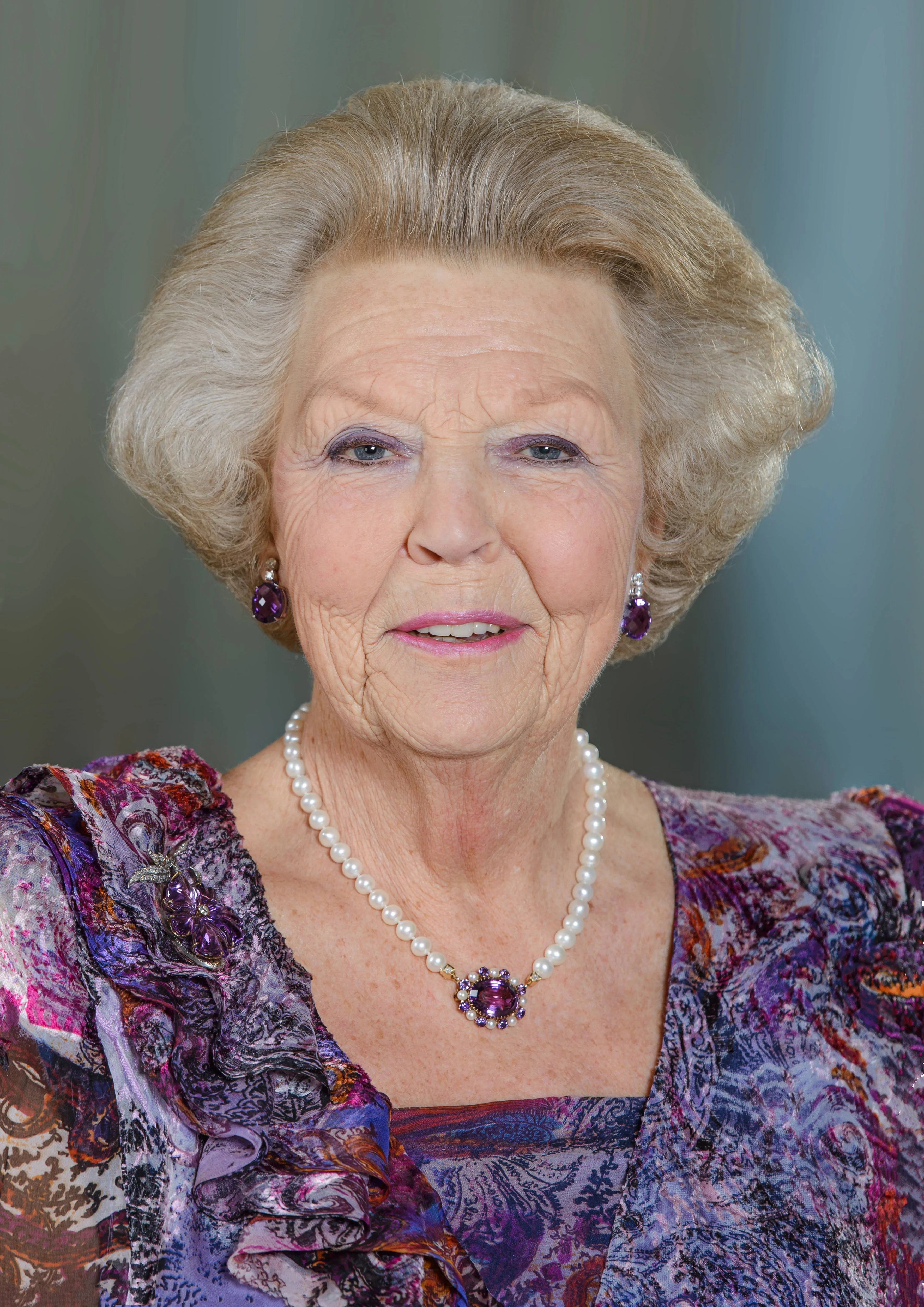
Image from Wikipedia
Image from Wikipedia
Beatrix of the Netherlands: A Monarch Between Tradition, Modernity, and Historical Responsibility
A Formative Personality of the Dutch Royal House
Beatrix Wilhelmina Armgard, Princess of the Netherlands, Princess of Orange-Nassau, and Princess von Lippe-Biesterfeld, is one of the most prominent public figures in the history of post-war Netherlands. Born on January 31, 1938, in Baarn, she grew up during a time marked by war, exile, and the reconstruction of Europe. From April 30, 1980, until April 30, 2013, she served as Queen at the helm of the Kingdom of the Netherlands, shaping her country's understanding of statehood for more than three decades. Since her abdication, she has held the official title of Her Royal Highness Princess Beatrix of the Netherlands.
Childhood in the Shadow of War
The early biography of Beatrix is closely related to the upheavals of the 20th century. As the first child of Princess Juliana and Prince Bernhard, she experienced as a small child the flight of the royal family during the German invasion of the Netherlands in May 1940. The family first went to England, then to Canada, before returning to the Netherlands in 1945. These experiences shaped not only her childhood but also her later understanding of duty, continuity, and state stability.
Beatrix spent the rest of her youth at Paleis Soestdijk, where she received the titles Princess of the Netherlands, Princess of Orange-Nassau, and Princess von Lippe-Biesterfeld at birth. Even in this early phase, it became clear that she would not view her monarchical role as mere representation but rather as an institutional duty. This understanding would later be key to her authority.
From Heiress to Queen
On April 30, 1980, Beatrix took over the office of Queen of the Netherlands from her mother Juliana. Her accession to the throne marked the beginning of an era where the royal house adopted a sober, professionalized, and yet highly symbolic presence. The Royal House of the Netherlands describes her reign as characterized by extraordinary dedication, knowledge, and commitment, a characterization that succinctly captures her style in public office.
Throughout her reign, Beatrix remained a monarch with a clear institutional role. She utilized Paleis Noordeinde as her working palace while the family lived at Paleis Huis ten Bosch starting in 1981. Her time on the throne fell during a period of political and societal changes, yet Beatrix embodied continuity. In particular, her role in conjunction with the Dutch constitution, the parliamentary system, and recurring government formations gave her position a special significance.
Governance Style, Sense of Duty, and Public Perception
Beatrix was not a queen of great gestures but a ruler of discipline, precision, and formal clarity. Her public appearances remarkably combined distance with proximity: respectful, controlled, often strict in demeanor, yet visibly interested in culture, society, and national cohesion. This combination earned her widespread recognition in the Netherlands and made her one of the most respected monarchs in Europe.
When her abdication was announced in 2013, Prime Minister Mark Rutte honored her as a universally esteemed queen with exceptional dedication, knowledge, and participation. By abdicating on April 30, 2013, in favor of her son Willem-Alexander, she embodied her belief that responsibility should be passed on to the next generation. This decision underscores her statesmanlike vision and understanding of monarchical renewal.
Family, Bonds, and Personal Continuity
In 1966, Beatrix married the German diplomat Claus von Amsberg. The marriage produced three sons: Willem-Alexander, Johan Friso, and Constantijn. Family life was intertwined with her public role for decades, adding a personal and ceremonial dimension to the royal biography. The death of Prince Claus on October 6, 2002, marked a significant turning point in her life and in the public perception of the royal house.
After her abdication, Beatrix retreated to Kasteel Drakensteyn in Lage Vuursche, the place where she had lived from 1963 to 1981. This step aligns with her life picture: not a demonstrative retirement but a controlled transition into a new role. The connection between public duty and personal constancy remains one of the most striking features of her biography.
Cultural Role and Social Presence
Beatrix understood the monarchy not only as a political institution but also as a cultural responsibility. The Dutch royal chronicle shows that as queen, she devoted considerable attention to significant national events and maintained a visible presence in social life. Even after her abdication, she remained engaged in representative and cultural contexts, such as the awarding of the Zilveren Anjer of the Prins Bernhard Cultuurfonds or supporting projects for the preservation of traditional windmills.
These activities highlight how closely Beatrix linked state awareness with cultural engagement. She represented a monarchy that extended beyond symbolism, influencing the social and cultural infrastructure of a country. This is where her lasting impact lies: not through dramatic upheavals but through reliable presence, institutional dignity, and a clear approach to public duty.
Abdication as a Deliberate Sign of Transition
When Beatrix announced her abdication on January 28, 2013, effective April 30 of the same year, she emphasized the responsibility of a new generation. The decision was neither a withdrawal from public life nor a break with the duty, but an orderly, dignified transition. By the end of her reign, the role of the monarch in the government formation process also shifted, reflecting the modernized constitutional reality of the Netherlands.
The abdication did not mark the end of her relevance but the beginning of a new phase as an experienced, still-recognized princess. Her life story illustrates how monarchical continuity can function in a democratic society: through adaptation, institutional awareness, and personal integrity. Beatrix thus remains a key figure in Dutch contemporary history.
Beatrix in Historical Memory
In historical retrospect, Beatrix appears as a queen of stability. Her reign lasted more than three decades, a period during which the Netherlands experienced social modernization, European integration, and political upheavals. In this context, she stood for continuity, competence, and reliable representation. This makes her biography interesting not only for the Netherlands but also for the history of European monarchies as a whole.
Her public image remained remarkably consistent: serious, factual, disciplined, and marked by a strong sense of duty. These very attributes explain why Beatrix continues to be perceived as a central historical figure even after her abdication. Her biography offers a rare clear view of the connection between personal stance, political role, and national identity.
Conclusion: A Queen of Historical Radiance
Beatrix is compelling because she lived the monarchy not as a spectacle but as a responsible state task. Her life story weaves together experiences of war, family continuity, political acumen, and cultural engagement into an impressive whole. Those interested in European history, the Dutch royal house, and the development of modern monarchies will find in her one of the most shaping figures of the 20th and early 21st centuries. Her public engagement shows that true greatness often arises from discipline, constancy, and the ability to recognize the right moment for transitions.
Official Channels of Beatrix (Netherlands):
- Instagram: no official profile found
- Facebook: no official profile found
- YouTube: no official profile found
- Spotify: no official profile found
- TikTok: no official profile found