
Alexandra Völker
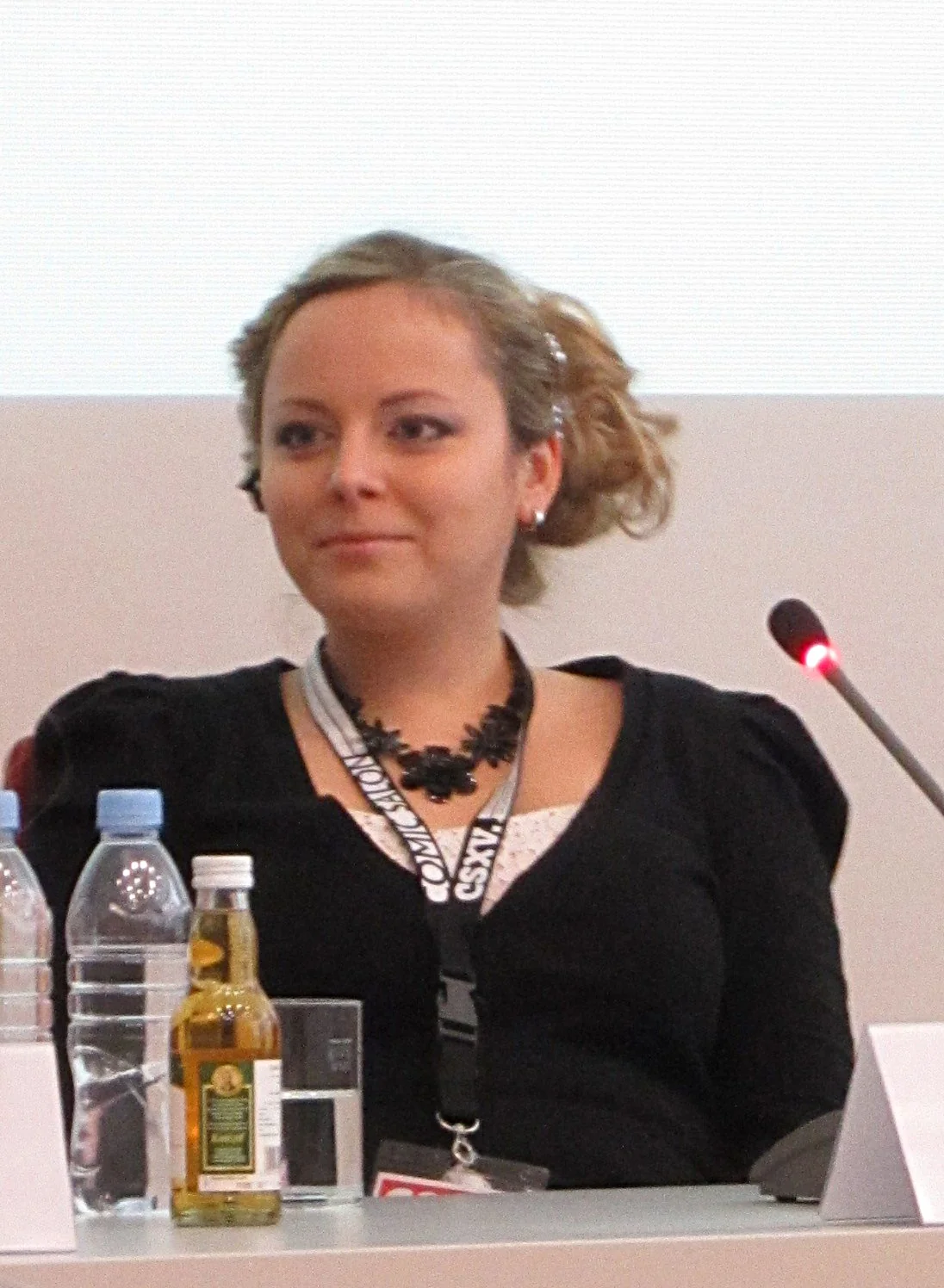
Image from Wikipedia
Image from Wikipedia
Alexandra Völker: The Manga Artist Enriching German Pop Culture with Clear Lines and Strong Style
A Defining Voice in German Manga: Alexandra Völker Between Youth Culture, Fashion World, and Visual Language
Alexandra Völker, born on July 12, 1986, is one of the defining German comic artists in the manga style. Her work combines Shōjo aesthetics, a sense of fashion, and narrative clarity into a distinctive signature that early on set itself apart from classic Western comic traditions while remaining unique. She gained recognition through early publications with Egmont Manga and Anime, and later with Carlsen, developing remarkable artistic confidence even as a teenager.
Her career exemplifies a generation of German-speaking female manga artists who did not merely imitate Japanese models but shaped their own visual language from them. Völker works with strong contours, dense inking, and a pronounced sense of clothing, body language, and visual dramaturgy. This is where the fascination of her art lies: it tells stories about style, identity, and the tension between outward appearance and inner development.
Early Years: Drawing as a Way of Life Long Before the First Volume Was Released
Alexandra Völker's path began very early. At just 14 years old, she drew caricatures for the daily newspaper Westfalenpost, gaining her first journalistic experience. Alongside this, she was influenced by Disney's imagination, Maya the Bee, French comics, and eventually manga; this blend of European and Japanese visual culture became the foundation of her later work. She learned early on that drawing is not just technique, but also observation, rhythm, and expression.
In an interview, she described how she drew a lot with her older sister and later received regular art lessons from an artist in her hometown. There, she learned fundamental techniques in pencil, charcoal, acrylic, and oil, which expanded her understanding of form and surface. This early training explains why her later mangas are not only alive with pop aesthetics but are also supported by solid drawing discipline.
The Breakthrough: Connichi Competition, Egmont, and the Start with Catwalk
In 2004, Völker participated in the Doujinshi competition at Connichi in Cologne and won second place. This moment became a turning point—not in her music career, but in her comic career: the publisher Egmont Manga and Anime signed her. In 2005, her first work, Catwalk, was released, which she had drawn while still in school; a year later, Volume Two followed. That such a young artist debuted with a two-volume manga demonstrated not only talent but also remarkable work discipline.
Catwalk quickly became her most recognized early work and opened doors to other publishers. Soon after, she moved to Carlsen Verlag and published the short story Make a Date in the Chibi-Manga series in 2007. This transition marked her professional ascent: Völker was no longer just an emerging author but a staple in the German manga scene with her own audience and recognizable style.
Development of Work: From Catwalk to Paris to Dark Magic
The work Catwalk is the center of her early creation. The story of an albino girl who accidentally begins a modeling career intertwines fashion, self-image, and the dark side of the modeling profession with a clear coming-of-age narrative. Here, Völker works with a strong sense of visual hierarchies: clothing, hairstyles, and body language convey emotional meaning just as much as dialogue and action. The depiction of the model is not idealized but shown as a projection surface for societal expectations.
In 2008, Paris was released, continuing the story from Catwalk and expanding the narrative world. In 2010, Dark Magic followed as a new one-shot, once again demonstrating her stylistic range. These releases showcase an artist who does not repeat her themes but instead opens new narrative spaces within familiar aesthetics. It is particularly in the intersection of romance, fashion, and subtle identity exploration that the recognizability of her oeuvre lies.
Drawing Style and Aesthetics: Manga, Caricature, and the Art of Strong Contours
Alexandra Völker's style is clearly rooted in manga, but unmistakably carries traces of caricature and European comic tradition. She works with strong lines, fully shades with ink, and places great emphasis on distinctive clothing. She attempts to depict hair as naturally as possible, which gives her figures, despite stylized eyes and typical shōjo elegance, an astonishing physicality. The result is a visual vocabulary that appears very controlled yet remains emotionally open.
Also noteworthy is her approach to the fashion world as a narrative space. Clothing for Völker is not merely decoration but a dramatic tool: fabrics, silhouettes, and styling tell character development, social belonging, and vulnerability. In this way, she operates in a field central to manga that few in the German-speaking realm elaborate on so consistently. Her images combine pop culture with sensitive observation of body and role.
Japan, Shōjo Manga, and Cultural Influences
In her statements, Völker emphasizes how strongly she has been shaped by Japanese comics but also by French comics. As a child, she watched Sailor Moon and wanted to draw manga and tell her own stories ever since. At the same time, she never strictly separated manga and comics but understood both as part of a shared drawing culture. This stance explains the openness in her style, which does not rely solely on imitation but on translation and evolution.
Her working method also reflects a deep cultural curiosity. She still names Japan as one of her favorite countries and describes the experience there as inspiring. This is relevant for her audience because it places Völker among that generation of German-speaking artists who do not passively consume global pop culture but actively transform it into their own artistic system. It is precisely this authenticity of her manga that arises from knowledge, not folklore.
Career and Public Perception: An Artist Between Scene and Publishing World
The public perception of Alexandra Völker has steadily developed alongside her publications. Her early success in the competition and the subsequent publishing contract marked her as a promising talent with a bright future. In reports and interviews, it was repeatedly highlighted that she published at a very young age and that her first volumes sold particularly well. This early resonance propelled her career in a way that was not a given in the German manga landscape.
Her connection to the music and fashion world of youth culture also contributed to the recognizability of her work. Völker's characters inhabit urban, style-conscious scenarios that visually recall fanzine culture, shōjo manga, and contemporary lifestyle aesthetics. Her relevance thus lies not only in her illustrated works but in the way she encapsulated a feeling of life in the 2000s artistically.
Work List Instead of Discography: Key Milestones at a Glance
Since Alexandra Völker works as a comic artist, one speaks of a body of work and publication history rather than a discography. Her central publications include Catwalk, Catwalk Volume 2, Make a Date, Paris, and Dark Magic. These titles form the foundation of her literary and drawing profile and show an author who early on focused on recognizable thematic fields. Fashion, youthful self-discovery, and romantic conflicts make up the core repertoire.
Catwalk remains particularly important as a key work, as it consolidates her themes and exemplarily showcases her drawing strengths. The fact that the manga was also adapted into an audio play refers to the media adaptability of her material. In the German manga scene, Völker has thus secured a firm place: as an artist who published early, worked with visual precision, and infused her characters with a sense of style and social subtleties.
Cultural Influence: Why Alexandra Völker Remains Important
Alexandra Völker represents a phase in which German manga gained visibility and developed its own aesthetic standards. Her work demonstrates how female-shaped youth culture, fashion, and visual storytelling merge into a serious artistic expression. Her particular focus on outfits, surfaces, and identity issues has resonated with many readers who long found themselves absent in classic comics. This is her cultural value: she opened spaces for different perspectives.
Even in retrospect, her position in the German-speaking comic landscape remains remarkable. She belongs to the artists who not only adapted manga in the German context but also thought about it independently. This makes her works interesting not only for fans of Japanese pop aesthetics but also for readers who want to understand the development of German comics. Alexandra Völker is thus more than a manga artist: she is a precise storyteller of visual youth culture.
Conclusion: A Distinctive Artist Personality with a Clear Signature
Alexandra Völker fascinates with her early professionalism, her confident visual language, and her consistent thematic choices. Her work combines fashion, coming-of-age, identity, and manga aesthetics into a distinctive profile that stands out in the German comic landscape. Those who view her work see not only beautiful figures but an artist with a clear eye for milieu, emotion, and visual dramaturgy.
For these reasons, engaging with her publications remains worthwhile even today. They demonstrate how strongly personal influence, cultural openness, and artistic discipline can interact. Alexandra Völker remains exciting because she has created her own visual world that takes both style and content seriously. Those who are not yet familiar with her works should discover them and experience the energy of an artist who has sustainably shaped German manga.
Official Channels of Alexandra Völker:
- Instagram: no official profile found
- Facebook: no official profile found
- YouTube: no official profile found
- Spotify: no official profile found
- TikTok: no official profile found
Sources:
Upcoming Events
Manga Figures and Video Games Workshop with Alexandra Völker