
Alexander von Zemlinsky
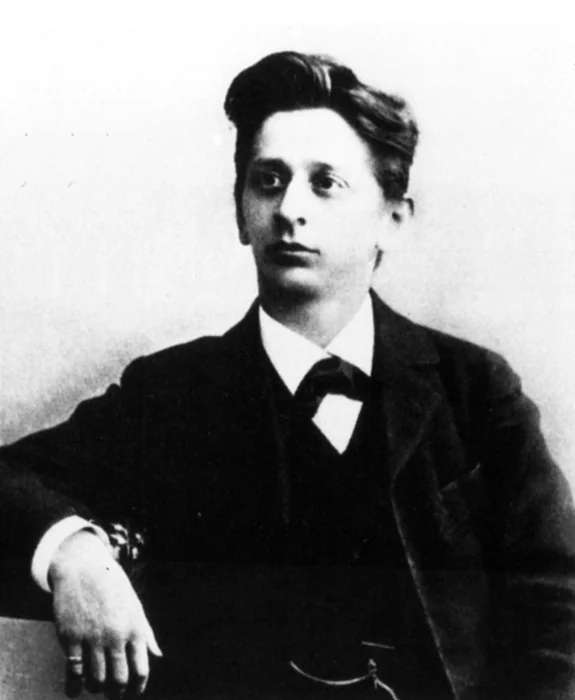
Image from Wikipedia
Image from Wikipedia
Alexander von Zemlinsky – the great Viennese sound architect between late Romanticism, modernity, and musical theater
A composer, conductor, and master of fine dramatic tension
Alexander von Zemlinsky is considered one of the most fascinating personalities in Austrian music history: a composer, conductor, composition teacher, and arranger born in Vienna, who found a distinctive voice between late Romanticism and musical modernity. Born on October 14, 1871, and passed away on March 15, 1942, in Larchmont, he shaped the cultural centers of Vienna, Prague, Berlin, and finally New York as a musician, educator, and opera conductor. Despite his high esteem in his own circles, he was denied the great breakthrough during his lifetime; it is precisely from this that the allure of his biography and œuvre arises today. ([deutsche-biographie.de](https://www.deutsche-biographie.de/gnd11863643X.html?utm_source=openai))
Viennese origins and early musical influences
Zemlinsky grew up in a diverse Viennese environment that significantly influenced his later artistic stance. The biography on the Alexander Zemlinsky site describes him as a child of Leopoldstadt, embedded in a city where musical education, theatrical practice, and intellectual exchange were closely intertwined. His talent for piano and accompanying showed early on, quickly leading him into the vibrant world of music. ([zemlinsky.at](https://www.zemlinsky.at/en?utm_source=openai))
Even his early career points to a rare dual talent: Zemlinsky was both a keenly listening practitioner and a composer with a strong sense of form. Sources list him as a musician, arranger, and conductor, making him an artist who not only wrote but also interpreted, shaped, and communicated music. This versatility later made him particularly valuable for opera and concert operations in Vienna and Prague. ([deutsche-biographie.de](https://www.deutsche-biographie.de/gnd11863643X.html?utm_source=openai))
The ascent: conductor, networker, musical authority
After 1900, Zemlinsky was firmly established as a musical figure in Vienna, even if the big public breakthrough eluded him. From 1900 to 1904, he served as conductor at the Carl-Theater and the Theater an der Wien, where he was initially entrusted mainly with operetta. In 1904, he took up the position of conductor at the Volksoper, later also spending a season at the Hofoper, where he finally could conduct larger repertoire pieces. ([zemlinsky.at](https://www.zemlinsky.at/en))
More important than mere positions was his role in the network of Viennese modernity. Zemlinsky moved within a circle of composers, writers, critics, and artists, including Gustav Mahler, Franz Schreker, Hugo von Hofmannsthal, and Arnold Schönberg. These connections illustrate a musician who did not work in isolation but was very much part of the discourse of an era that radically renewed music theater and concert culture. ([zemlinsky.at](https://www.zemlinsky.at/de/biographie/wien-1895-1911?utm_source=openai))
Prague as a flourishing artistic period
In 1911, with his move to Prague, a central phase of his music career began. As the opera conductor at the Deutsches Landestheater, Zemlinsky remained there until 1927 and celebrated his greatest successes as a conductor, particularly with Mozart, Wagner, Mahler, and Schönberg. Sources emphasize that his name in Prague stood for a natural, music-serving, and highly sensitive interpretation. ([zemlinsky.at](https://www.zemlinsky.at/en))
The Prague years were also extraordinarily productive compositionally. Despite the pressures of conducting, his most important works emerged, including the string quartets, the stage music to Cymbeline, the Lyric Symphony, and the operas A Florentine Tragedy and The Dwarf. Particularly, the Lyric Symphony from 1922/23 is regarded as a central sound painting of his œuvre; the source highlights its proximity to Mahler's Das Lied von der Erde and its special orchestral color. ([zemlinsky.at](https://www.zemlinsky.at/en/biography/prague-1911-1927-II))
Operas, orchestral colors, and the great expressive line
For Zemlinsky, music theater was not just a genre but an ideological center. As early as before 1910, he wrote four operas, and during his Prague years, his expressive language condensed into that blend of dramatic precision, harmonic tension, and colorful orchestration that makes his works unmistakable. In A Florentine Tragedy and The Dwarf, it is particularly evident how finely he translated psychological conflicts into music. ([zemlinsky.at](https://www.zemlinsky.at/en))
The Deutsche Biographie emphasizes that while Zemlinsky did not cross the threshold into atonality and did not embrace Schönberg's twelve-tone technique, his music operated at the highest technical level. It combines Brahms' principle of developing variation with Wagner's harmonics, orchestral polyphony, and sound enchantment. This is precisely where his artistic independence lies: modern, yet not dogmatic; expressive, but never arbitrary. ([deutsche-biographie.de](https://www.deutsche-biographie.de/gnd11863643X.html))
Berlin, exile, and the breaks of later years
In 1927, Zemlinsky moved to Berlin, where he became the first conductor at the Kroll Opera and later a teacher at the Academy of Arts. However, the political turn destroyed his further ascent: after the Nazis took power, he had to return to Vienna in 1933. The previously visible breakthrough as an opera composer in Germany was abruptly interrupted. ([deutsche-biographie.de](https://www.deutsche-biographie.de/gnd11863643X.html))
In 1938, he fled with his second wife via Prague and Rotterdam to New York, where he could not really find his footing professionally. A nervous breakdown and several strokes hindered his compositional work, with the last opera, The King Kandaules, remaining unfinished and rejected by the Metropolitan Opera in 1939. These later years give his life path a tragic dimension that still resonates in his reception today. ([deutsche-biographie.de](https://www.deutsche-biographie.de/gnd11863643X.html))
Discography, rediscovery, and critical reception
Today’s reception of Zemlinsky is closely linked to the history of recordings and editions. Warner Classics features several significant recordings, including Lyric Symphony, Symphonie lyrique & Six Lieder, The Mermaid & Sinfonietta, as well as The Dwarf, conducted by Gabriele Ferro, Armin Jordan, and James Conlon. This shows how strongly his work is now perceived as part of the classical core repertoire in an extended sense. ([warnerclassics.com](https://www.warnerclassics.com/artist/alexander-zemlinsky/releases))
The Alexander Zemlinsky site also emphasizes the later renaissance: it wasn't until the 1970s that increased performances, recordings, and scholarly research into his biography initiated a broader rediscovery. The Alexander Zemlinsky Fund, established by his widow Louise, continues to support research, critical editions, and the dissemination of his works, and it also awards a prize for special contributions to his legacy. Thus, Zemlinsky is not only historically present but institutionally secured. ([zemlinsky.at](https://www.zemlinsky.at/en/more/fund-and-prize))
The critical reception describes him as a composer of significant inner urgency and intense emotionality. His music is read as an authentic testament to the upheavals between 1890 and 1940, serving as an intersection of late Romanticism, modernity, and psychologically condensed expressive art. It is precisely this tension that makes Zemlinsky equally fascinating for music press, scholars, and listeners. ([zemlinsky.at](https://www.zemlinsky.at/en))
Style, significance, and cultural influence
Zemlinsky's style thrives on highly differentiated orchestration, sensitive harmonics, and the ability to transform inner conflicts into musical gestures. His works combine chamber music condensity with symphonic breadth, and his major vocal and stage works exhibit a particular sensitivity for language, timbre, and dramatic intensity. In this regard, he stands between the Viennese tradition and the artistic spirit of renewal of the 20th century. ([deutsche-biographie.de](https://www.deutsche-biographie.de/gnd11863643X.html))
His work as a conductor also contributes to his cultural influence. In Vienna, Prague, and Berlin, Zemlinsky was not merely a caretaker of the repertoire, but an interpretative artist with a profile, conveying the works of other composers with great musicality. His enduring impact thus extends in two directions: through his own compositions and through the example of a conductor who understood sound as a language. ([zemlinsky.at](https://www.zemlinsky.at/en))
Conclusion: Why Alexander von Zemlinsky fascinates again today
Alexander von Zemlinsky fascinates because his life and work encapsulate the tragedy, elegance, and tension of Viennese modernity. He is a composer of transition, but not one of indecision: his music possesses character, expression, and formal consistency. Anyone experiencing Zemlinsky live encounters a sound universe that has an immediate emotional impact and is historically rich. ([deutsche-biographie.de](https://www.deutsche-biographie.de/gnd11863643X.html))
Especially in a time when the repertoire is being listened to more widely, revisiting this exceptional musician is worthwhile. Zemlinsky represents musical intelligence, dramatic intensity, and a stage presence that continues to resonate today. His works deserve the concert hall, the opera, and the intense attention of an audience seeking great music as a living experience. ([zemlinsky.at](https://www.zemlinsky.at/en/more/fund-and-prize))
Official channels of Alexander von Zemlinsky:
- Instagram: no official profile found
- Facebook: no official profile found
- YouTube: no official profile found
- Spotify: no official profile found
- TikTok: no official profile found
Sources:
- Alexander Zemlinsky - His Life - His Work - Official Website
- Alexander Zemlinsky - His Life - His Work - Official Website
- Biography Prague 1911–1927 II - Official Website
- Alexander Zemlinsky Endowment Fund - Official Website
- The OREL Foundation - Alexander Zemlinsky Works
- Warner Classics - Alexander Zemlinsky Releases
- Deutsche Biographie - Zemlinsky, Alexander von
- Wikipedia: Alexander von Zemlinsky