Zero Waste & Green Events in Cologne: Climate Festival & More
Zero Waste & Green Events: How Cologne Will Celebrate Sustainably in the Future
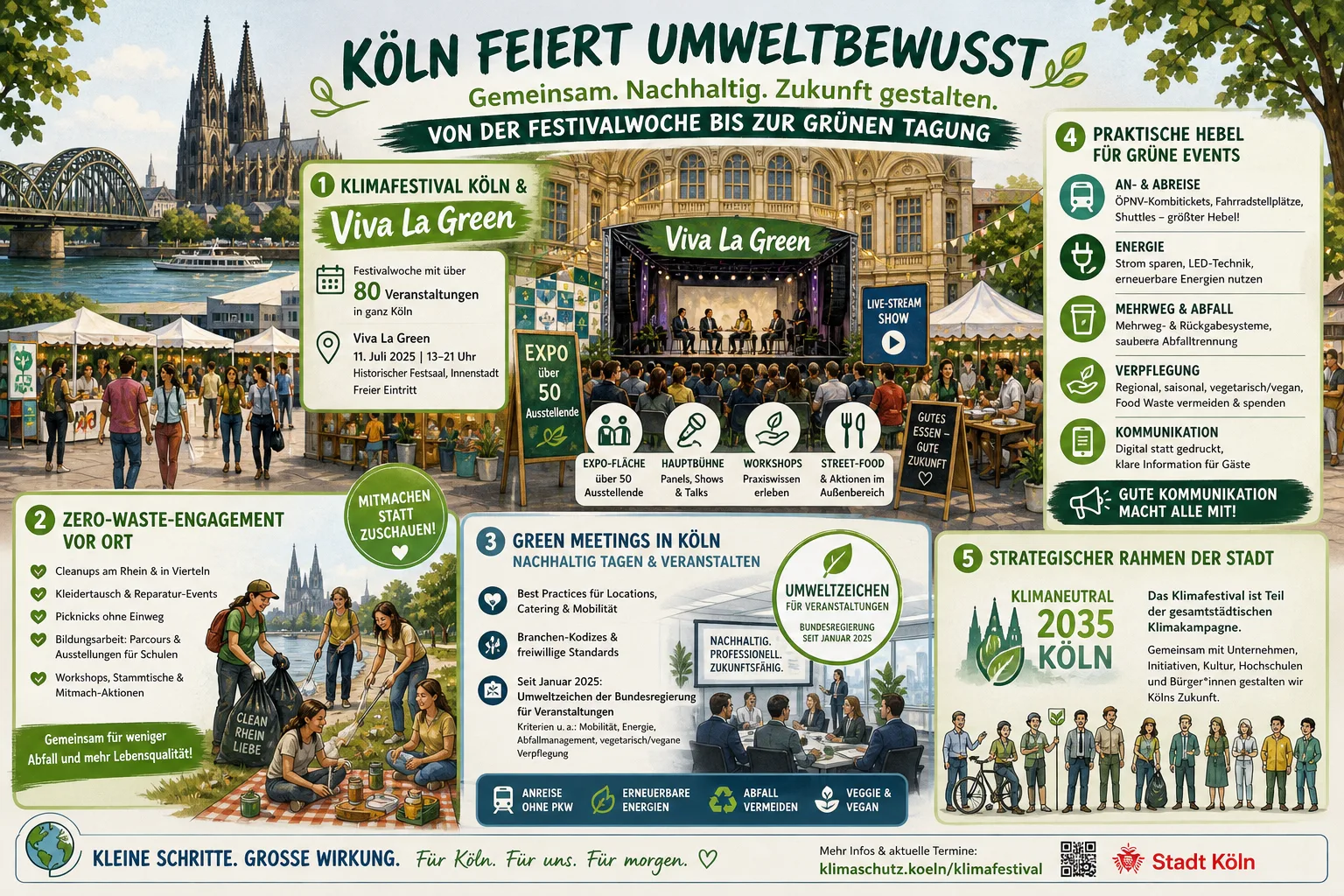
Can a city celebrate without seeing the traces of the night everywhere the next morning? In Cologne, the number of events aiming for exactly that is growing: less waste, more climate-friendly mobility, more conscious catering, and clear communication. This guide shows which approaches are particularly effective for upcoming festivals, neighborhood formats, and business events in Cologne – and how you can concretely implement them for your next event.
The Biggest Levers: Mobility, Energy, Waste, Communication
1) Mobility: Make Arrival as Easy as Possible Without a Car
At many events, the largest emissions are not generated on site, but on the way there. For upcoming events in Cologne, these measures are particularly effective:
- Public Transport First Communication: Invitations, websites, and tickets mention stops, walking routes, barrier-free routes, and alternatives to car travel.
- Bicycle-Friendly Arrival: additional parking spaces, clear signage, possibly temporary parking areas and lighting.
- Park-and-Ride or Shuttle Logic for larger formats to reduce city center traffic (with clear schedules and return information).
2) Energy: Reduce Consumption, Improve Source
For stages, sound, lighting, screens, and catering, electricity demand can vary greatly. Future green events therefore rely on a mix of efficiency and clean supply:
- LED and Efficient Event Technology (including standby management, shutdown plans, timers).
- Avoid Peak Loads: bundle technology operating times, plan rehearsal windows, eliminate unnecessary continuous lighting.
- Electricity from Renewable Sources (e.g., via green electricity tariffs from the venue or service provider) – plus transparent indication of what was actually sourced.
3) Zero Waste: Prevention Before Recycling
“Zero Waste” for events does not mean perfection, but a clear system: prevent, reuse, only then separate and recycle. For upcoming events in Cologne, these building blocks are proven in practice:
- Reusable as Standard: cups, plates, cutlery – ideally a uniform system for the entire site.
- Frictionless Return: clearly visible return stations, clear routing, sufficient staff during peak times.
- Waste Islands Instead of Single Bins: residual waste, paper, packaging, organic waste (if sensible) together at one point – with clear pictograms.
- Food Waste Planning: realistic portion sizes, adjustments during the event, clear cut-off times for production.
4) Communication: Turn Guests into Participants
Sustainability works well at events when it is explained clearly and fairly. Upcoming events in Cologne should therefore consistently focus on the following communication points:
- Clarity in Advance: What is reusable? Is there a deposit? Where is the return? What is allowed (e.g., own water bottle)?
- On-Site Orientation: short, multilingual instructions, clearly visible pictograms, recognizable contact persons.
- Digital First: tickets, site map, program, updates, and feedback provided digitally – and print only where really needed.
Practical Plan: 10 Steps to a Zero-Waste Event (for Cologne)
- Define Goal: What should measurably improve (e.g., less residual waste, more public transport arrivals, less food waste)?
- Check Location: Are there fixed waste rooms, water connections, easily accessible public transport links, barrier-free access?
- Set Reusable System: Choose a system for the entire site and make it contractually binding with caterers/vendors.
- Plan Waste Logic: Determine number and locations of waste islands, signage, emptying rhythm, and responsibilities.
- Steer Catering Sustainably: prioritize seasonal/regional options, set vegetarian/vegan as standard, agree on portion and adjustment logic.
- Offer Water: Plan drinking water options (e.g., via dispensers/stations) and avoid single-use bottles where possible.
- Integrate Mobility: Include public transport and bicycle information in every invitation, route description, and ticket; create incentives if necessary.
- Optimize Energy & Technology: Set LED, shutdown plans, operating times, efficient devices, and transparent electricity sourcing.
- Brief Teams: Train security, bar, catering, volunteers, and cleaning staff on uniform rules (including “What to do in case of incorrect disposal?”).
- Document Results: Record waste amounts (at least residual waste), reusable rate/consumption, learnings, and feedback for the next event.
Important: The system must be intuitive for guests. The fewer special rules, the fewer incorrect disposals – and the better the atmosphere on site.
Green Meetings & Congresses: How Sustainability Becomes Measurable
For conferences, congresses, and corporate events, not only environmental impact counts, but also comparability and proof. In Cologne, future “Green Meetings” will be particularly credible if they are based on recognized criteria and communicate them transparently.
Recognized Standards as Orientation
- Blue Angel (DE-UZ) for Events: Criteria include mobility, energy, waste, and catering. Suitable for clarifying requirements and managing suppliers.
- ISO 20121 (Sustainability Management for Events): helpful if an organization regularly hosts events and wants to standardize processes.
What You Should Specify in Tenders and Contracts
- Reusable Obligation for food and drinks (including return points and cleaning logic).
- Vegetarian/vegan as default, with clear allergy and dietary options.
- No give-aways without benefit: If merchandise, then durable, demonstrably useful, and in appropriate quantity.
- Transparency: short sustainability info in the program (mobility, reusable, waste islands, accessibility, contact person).
On Site in Cologne: How Guests and Teams Find Their Way
So that upcoming green events in Cologne are not just “well-intentioned” but run smoothly, a consistent focus on guest guidance is worthwhile:
- Site Map with Sustainability Points: return stations, waste islands, drinking water, bicycle parking, public transport stops.
- Short Announcements Instead of Long Texts: “Return reusable here”, “Paper only please”, “Your arrival: train/bike recommended”.
- A Visible Help Team: people who support at waste islands and solve typical questions (deposit, return, routes).
- Think Barrier-Free: prioritize routes, signage, contrasts, quiet zones, and access in planning.
This creates an event that does not lecture, but invites – and where sustainability becomes part of the design experience.