Local Manufactory Labels from Cologne You Should Know
Local Brands & Manufactories from Cologne You Should Know
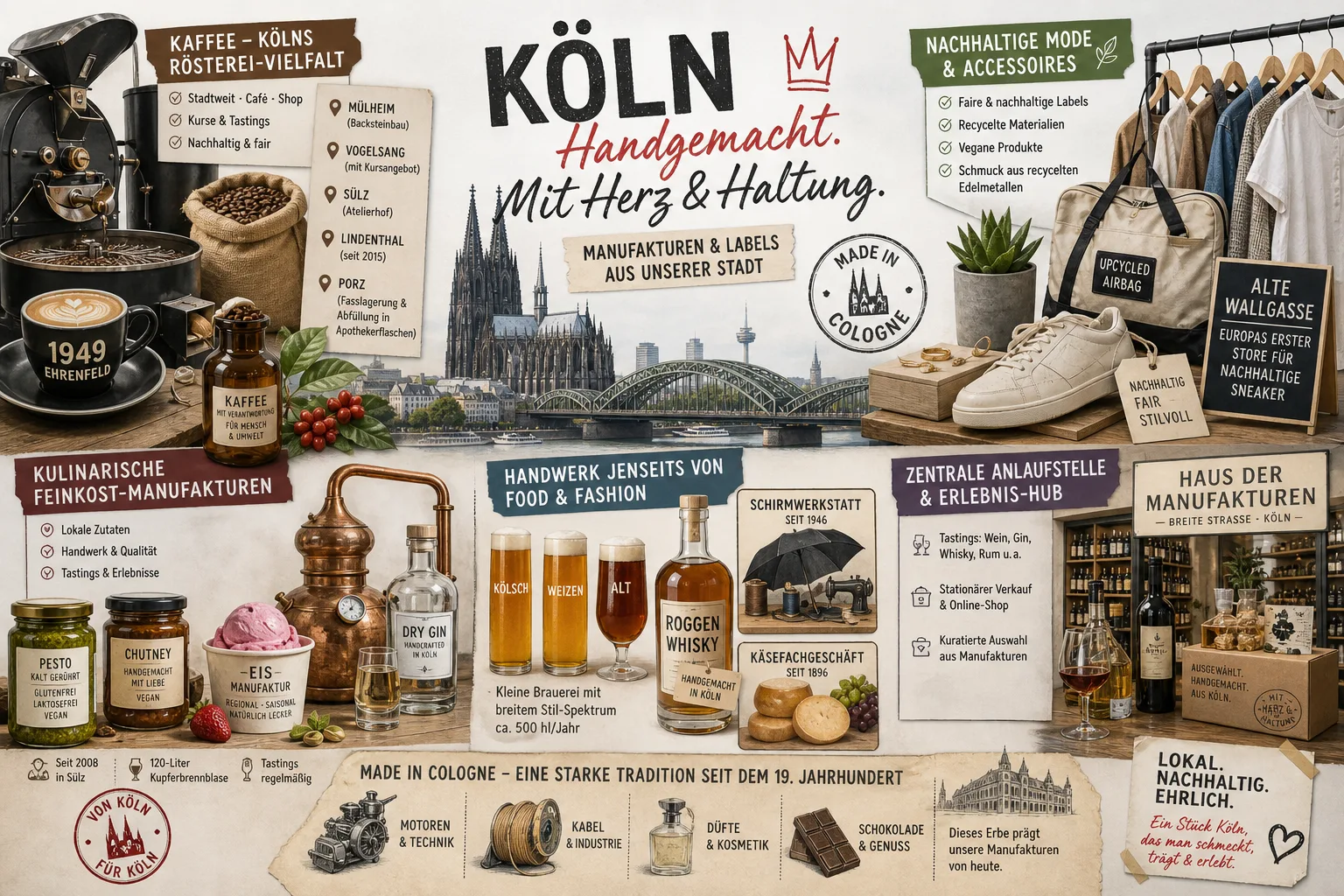
How would you describe Cologne if you could only choose one scent, one sip, and one piece of fabric? In the coming weeks and months, you can experience exactly that: the aroma of roasting from small coffee businesses, craft-produced spirits in moderated tastings, and fashion and accessory labels that focus on repair, upcycling, and transparent materials.
This guide deliberately focuses on future experiences: formats you can soon participate in (workshops, tastings, open studio days, pop-ups), as well as a practical checklist on how to recognize reputable local providers. This way, “Made in Cologne” becomes plannable for you—whether you live in Cologne or are preparing a visit.
Cologne Coffee Manufactories: How to Plan Your Next Roastery Visit
If you want an experience for your next day in Cologne that is both close to everyday life and “behind the scenes,” go for coffee: Many local businesses will soon again regularly offer formats that go beyond just the café.
Formats You Can Look for Soon
- Cuppings (Coffee Tastings): You taste several coffees side by side and learn to compare aromas in a structured way (acidity, sweetness, body).
- Roastery Tours: Insight into batch sizes, roast profiles, and quality control; often with a Q&A and a short introduction to sensory analysis.
- Barista Workshops: From espresso setup to milk texture; often also courses for filter methods (e.g., V60, AeroPress).
- Transparency Talks: Evenings where businesses explain how they assess origin, trade, and quality criteria (e.g., direct trade vs. importer models).
How to Get the Most Out of Your Visit
- Book in Advance: Small groups are common; secure your spot early via the respective calendar/newsletter.
- Bring Targeted Questions: “How fresh is the roast?”, “Which brewing method do you recommend for this bean?”, “What information can you share about the farm/cooperative?”
- Plan to Take Some Home: Take an appropriate amount (e.g., for 2–4 weeks) and store coffee airtight, dry, and protected from light.
Why this is E-E-A-T relevant: You check experience and expertise directly on site—and can base your purchasing decision on understandable criteria instead of pure marketing.
Sustainable Fashion & Upcycling Labels: Pop-ups, Repair Formats, and Fair Materials
In Cologne, you can especially experience how fashion consumption is changing: away from quick new purchases, towards repair, secondhand, material transparency, and creative upcycling ideas. Many labels and shops rely on events where you can ask questions and see processes.
What to Look for at Upcoming Events
- Repair Workshops: Replace buttons, stabilize seams, check zippers; ideal for wearing favorite pieces longer.
- Clothing Swap and Secondhand Evenings: Low-threshold entry to practically experience circular fashion.
- Upcycling Pop-ups: Products made from reused materials (e.g., technical textiles, tarpaulins, seat belts)—often with storytelling about material origin.
- Material and Supply Chain Sessions: Discussions about certifications, recycled content, production sites, and care instructions.
Mini-Check: Recognizing Credible Sustainability Claims
- Concrete Information instead of buzzwords: Material composition, care instructions, origin of processing.
- Verifiable Proof: recognized standards/certificates (where appropriate) or transparent documentation of the supply chain.
- Repair and Spare Parts Service: a strong signal that durability is truly meant.
If you buy upcycling, pay special attention on your next visit to workmanship (seams, edges, stress points) and whether the label actively explains care and repair. This builds trust and reduces bad purchases.
Fine Food Manufactories: Tastings, Souvenirs, and Seasonal Product Drops
For your next stroll through Cologne, it’s worth planning fine food manufactories as a fixed stop: Many work in small batches and announce new varieties, limited editions, or seasonal product lines in the future via newsletters and social channels.
Formats You’ll Find Frequently Soon
- Tasting Days: short tasting slots for sauces, spreads, pastries, or ice cream specials.
- Pairing Evenings: combinations like fine food & cheese, fine food & non-alcoholic alternatives, or dessert & coffee.
- Participatory Formats: Insights into recipe development, sensory analysis, or preservation (e.g., acid/sweetness balance in chutneys).
Souvenirs Suitable for Your Next Trip or Invitation
- Jarred Products (e.g., chutney, pesto variants, seasoning sauces): stable for transport and good for gifting.
- Coffee or Tea: ideal if you want to taste together with friends.
- Fine Snacks: if you’re looking for something that can be opened right away.
Safety Note: If allergens are relevant at tastings, actively ask about ingredients before tasting. Reputable providers give clear information and reliably label allergens.
Traditional Craft & Brewing Art: Tours, Tastings, and Workshop Insights
Craft becomes especially tangible when you see processes: tools, materials, quality control. In Cologne, you can specifically look for workshop days, tours, and tasting-based formats for your next plans—especially where brewing, distillation, or repair culture are the focus.
Experience Ideas for the Coming Months
- Brewery or Beverage Manufactory Tours: Focus on raw materials, fermentation/maturation, hygiene, and sensory analysis.
- Tasting Formats: Structured tasting with moderated explanation (aromas, production steps, responsible consumption).
- Repair and Care Demonstrations: e.g., for products where mechanics, textiles, and metal come together (a very good indicator of real craft expertise).
- Consultation-Intensive Specialty Stores: If you want to shop more consciously in the future, stores with real advice are often more valuable than the largest selection.
Important: If alcohol is part of a tasting, plan your arrival and departure so you get home safely. Many events also offer non-alcoholic alternatives or “spit cups.”
Hubs & Experience Locations: Where You Discover Many Cologne Labels at Once
If you want an efficient introduction for your next visit to Cologne, curated places and temporary markets are ideal: There you meet several local brands in one day, can compare, and talk directly to the people behind the products.
Typical Formats to Keep an Eye on in the Future
- Curated Showrooms & Concept Spaces: changing assortments with clear quality and origin storytelling.
- Pop-up Markets: limited in time, often focusing on craft, food, or design.
- Hybrid Offers: in-store advice combined with online reordering (practical if you want to buy again after your visit).
For your personal program: Plan at least 60–90 minutes so there’s time for conversations. These conversations are the core of local E-E-A-T signals: experience, expertise, and transparency are shown live.
How to Find Reputable Local Brands (Checklist)
So that you don’t just find “nice stories” but reliable quality on your next visits, a short checklist helps. It works equally for coffee, fashion, fine food, and craft.
- Transparency: clear information on materials, origin, processing, allergens (for food), and care.
- Proof Instead of Claims: certificates/standards, traceable documentation, or verifiable partners.
- Complaints & Service: clear contacts, repair options, return/warranty info.
- Quality Logic: explanations based on process and criteria (e.g., roast profile, material thickness, durability, hygiene).
- Realistic Promises: Beware of absolute-sounding statements (“100% climate neutral” without method). Reputable providers explain limits and goal conflicts.
If any point remains unclear to you, that’s the best question for your next visit or event evening. Good manufactories can handle these questions—and are happy to answer them.